Warehouse safety influences worker wellbeing and operational performance. This article summarises the most common OSHA warehouse violations, explains why compliance matters, and gives practical steps—checklists, training priorities, and hazard controls—to reduce risk and liability.
Table of Contents
ToggleWhat Are the Top Common OSHA Violations in Warehouses?
Recurring violations create the biggest risks. Key areas to address:
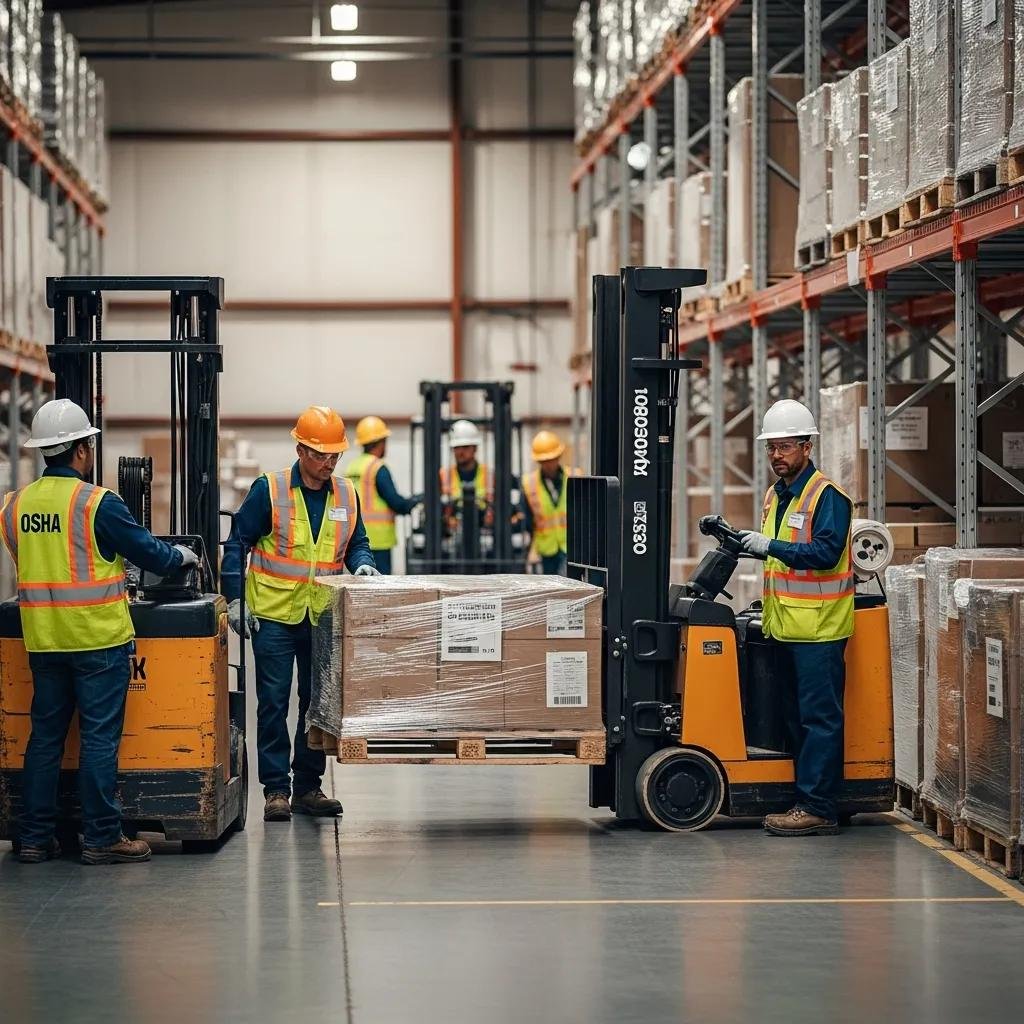
- Forklift Certification & Maintenance: Ensure operators are certified and equipment is routinely inspected and serviced to prevent accidents.
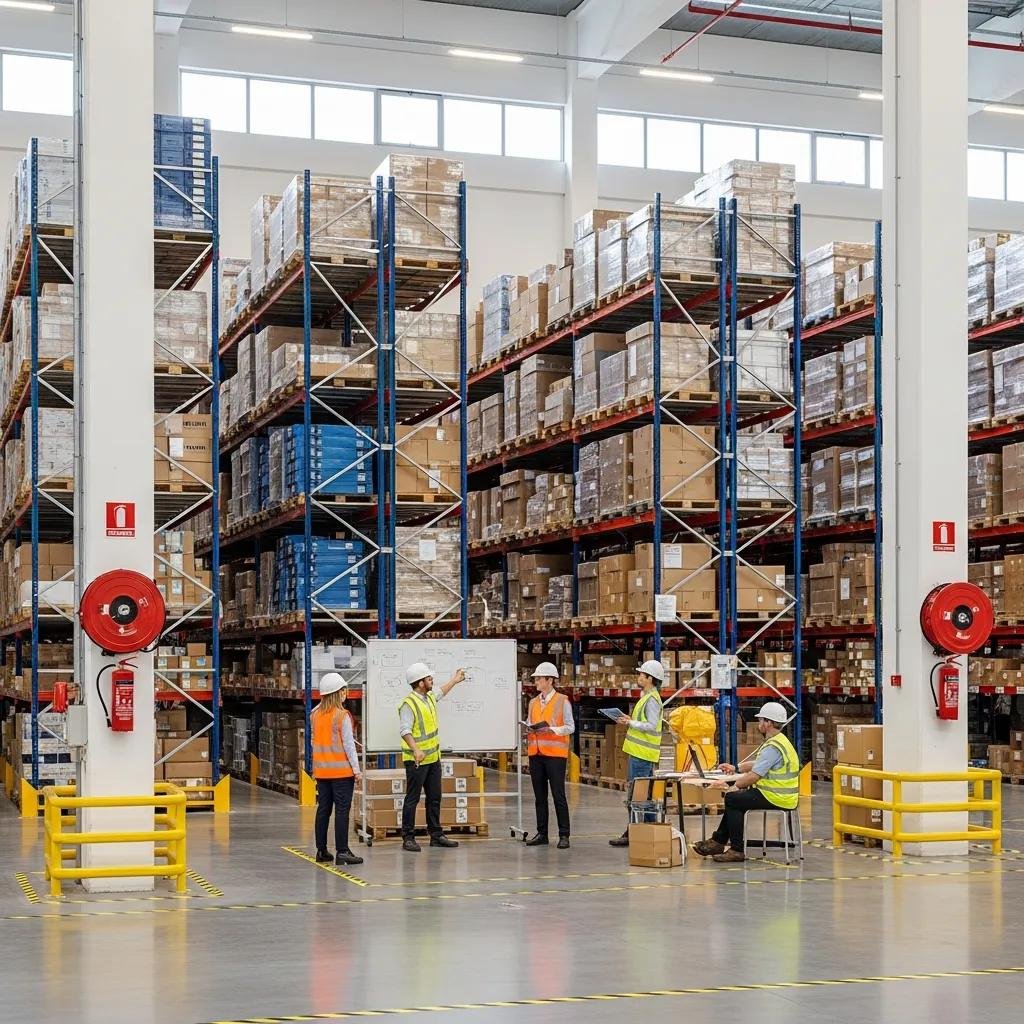
- Racking System Compliance: Install and maintain racks per specifications to avoid collapses and injuries.
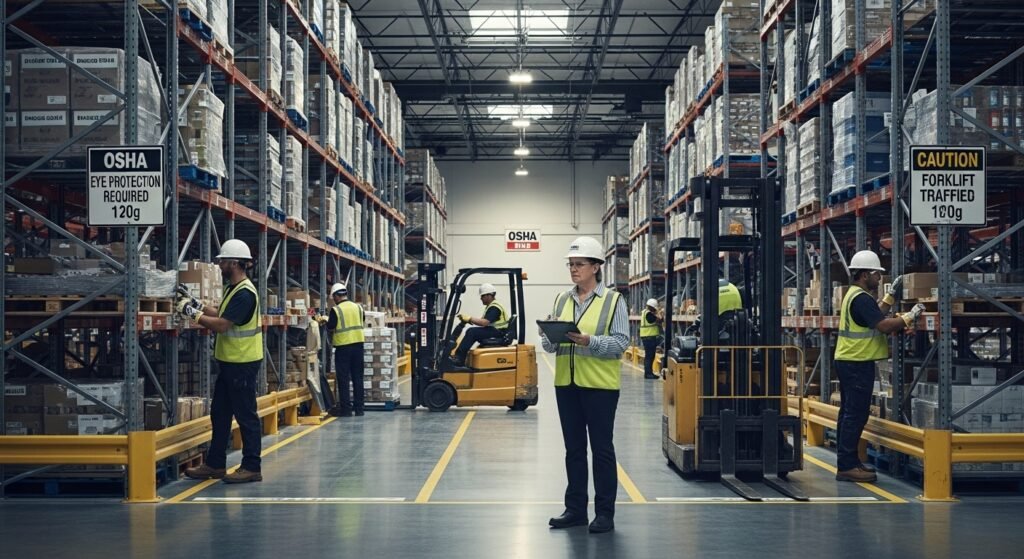
- Poorly Marked Walkways and Aisles: Maintain clear, durable markings so people and vehicles move safely through the facility.
Which Forklift Safety Violations Should You Address?
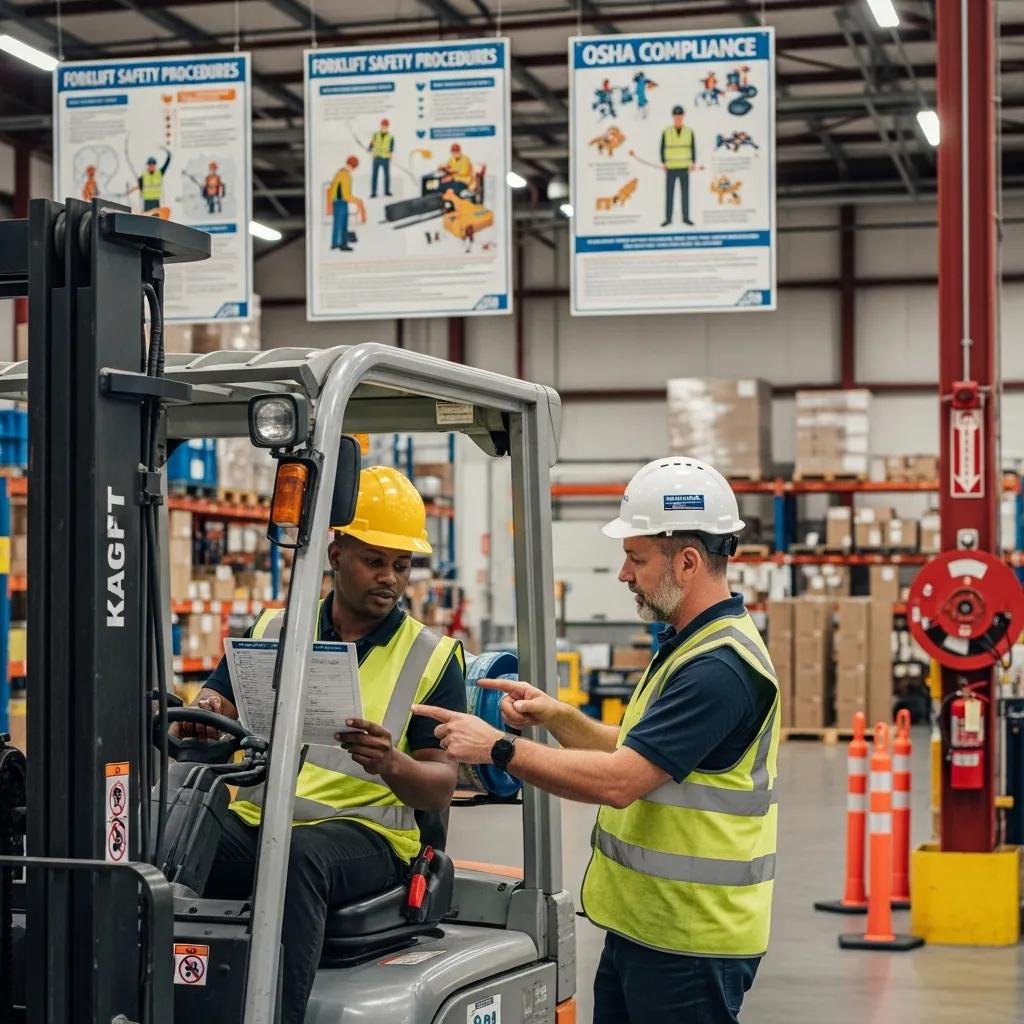
Forklifts are a frequent source of serious incidents. Focus on operator competence, inspection records, and correct loading practices.
- Certification Requirements: Verify operator certification and refresher training.
- Daily Inspection Logs: Keep concise daily checks to catch faults early.
- Proper Loading of Racks: Load and secure pallets to avoid imbalance or falls.
How Do Fire Hazards Contribute to OSHA Violations?
Fire risks commonly stem from deficient suppression, blocked egress, or improper storage of flammables; each is an OSHA concern.
- Insufficient Sprinkler Coverage: Ensure sprinklers meet coverage requirements for your storage arrangement.
- Blocked Fire Exits: Keep exits and routes clear and clearly signed.
- Improper Storage of Flammable Materials: Follow storage rules for flammables and separate incompatible items.
How Can You Use a Warehouse Safety Checklist to Ensure Compliance?
A checklist turns regulations into routine actions. Use it to audit hazards, guide training, and document fixes.
- Familiarize with Regulations: Base the checklist on applicable OSHA standards for your operations.
- Conduct Regular Audits: Schedule audits to find gaps and confirm corrective actions.
- Train Employees: Teach staff how to use the checklist and report hazards.
What Items Should a Comprehensive OSHA Warehouse Safety Checklist Include?
Cover the highest-risk items and make them easy to inspect regularly.
- Powered Industrial Trucks: Check brakes, controls, tires, and attachments.
- Walking-Working Surfaces: Inspect floors, ramps, and platforms for slips and trip hazards.
- Fire Safety Systems: Verify alarms, sprinklers, extinguishers, and exit lighting.
How Does Regular Safety Auditing Prevent Violations?
Frequent audits reveal hidden hazards, prompt corrective actions, and reinforce safety as a daily priority.
- Identifying Potential Issues: Find problems before they cause incidents.
- Proactive Corrective Actions: Fix root causes, not just symptoms.
- Enhancing Employee Safety: Use audit results to train and engage teams.
Effective OSHA Safety Training Programs for Warehouse WorkersWhat Are Effective OSHA Safety Training Programs for Warehouse Workers?
Training should be practical and focused on tasks workers perform: safe equipment use, PPE, and emergency response.
- Forklift Operation Training: Combine classroom instruction with on-the-job evaluation.
- PPE Training: Teach selection, fit, care, and limits of PPE.
- Emergency Procedures Training: Drills and role assignments improve response speed and clarity.
Why Is Forklift Operation Training Critical for OSHA Compliance?
Proper training reduces accidents, lowers legal exposure, and builds worker confidence.
- Minimizes Risks: Trained operators make better decisions under pressure.
- Legal Repercussions: Training documentation demonstrates compliance during inspections.
- Fostering a Culture of Safety: Skilled operators model safe behaviour.
How Does PPE Training Reduce Warehouse Safety Risks?
PPE training ensures workers know when and how to use gear and understand its protective limits.
- Understanding PPE Importance: Clarify the hazards each item addresses.
- Preventing Accidents: Correct use reduces exposure to common risks.
- Fostering a Culture of Safety: Reinforce PPE use in daily routines.
How Can Warehouse Hazard Prevention Reduce OSHA Violations?
Early hazard control, clear training, and reliable records cut violations and show regulators you are proactive.
- Proactive Inspections: Find and fix hazards before they escalate.
- Employee Training: Teach hazard recognition and reporting.
- Documentation and Record Keeping: Keep concise logs of inspections, repairs, and training.
What Emergency Procedures Are Required to Meet OSHA Standards?
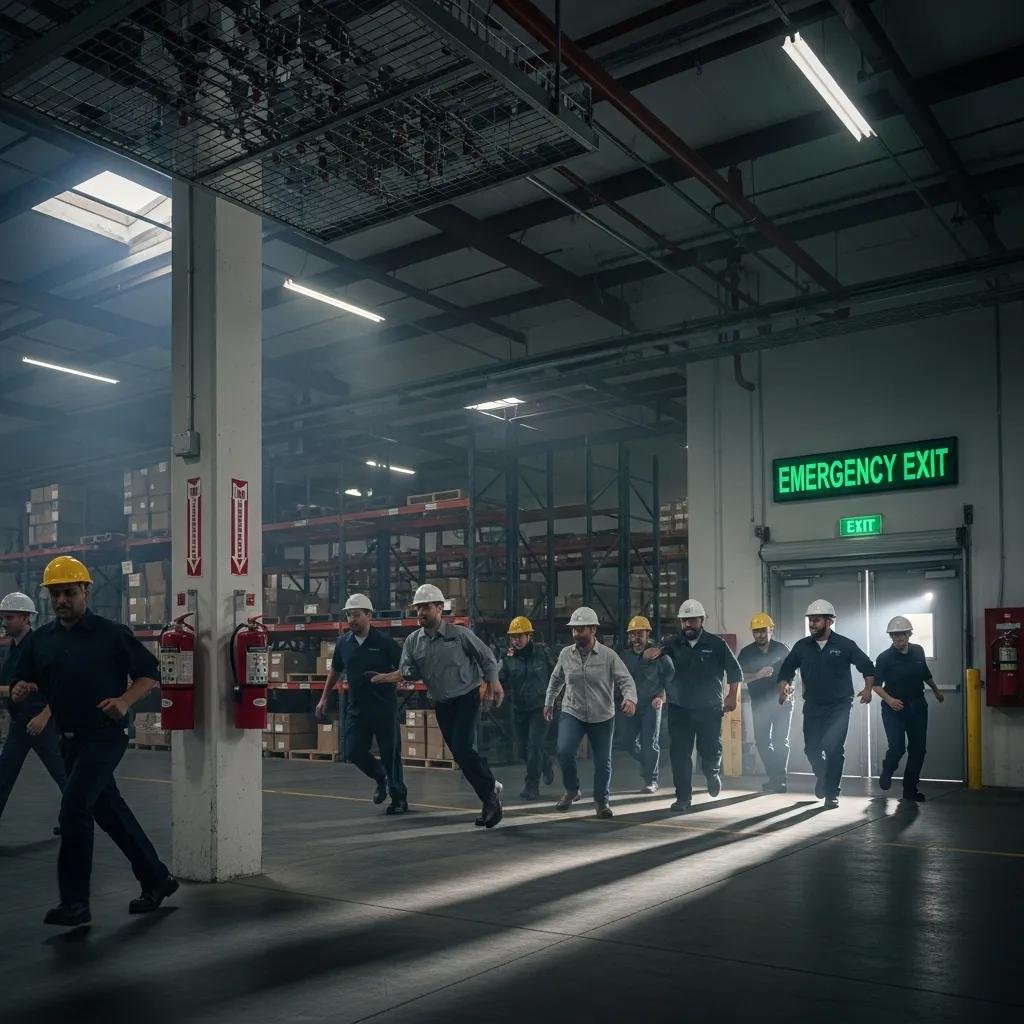
Emergency plans must identify exits, assign roles, and include regular drills and equipment checks so staff respond correctly.
- Emergency Exit Access: Mark and keep all exits unobstructed.
- Fire Safety Measures: Test alarms, sprinklers, and extinguishers on schedule.
- Employee Training: Practice evacuation and communication procedures.
How Do Corrective Actions Address Identified Warehouse Safety Risks?
Corrective actions should be timely, verified by follow-up audits, and used to improve procedures continuously.
- Immediate Remediation: Prioritise fixes that remove the greatest risk.
- Regular Audits: Confirm fixes and prevent recurrence.
- Continuous Improvement Practices: Use lessons learned to update training and checklists.
To keep your warehouse running safely and efficiently, consider exploring warehouse solutions that can help optimize your space and processes.
Frequently Asked Questions
What are the consequences of not complying with OSHA warehouse regulations?
Non-compliance can result in fines, legal liability, higher insurance costs, injuries, reputational damage, and operational shutdowns until hazards are corrected.
How often should safety training be conducted for warehouse employees?
Train at hire and at least annually, with additional sessions when new equipment or procedures are introduced.
What role does employee feedback play in improving warehouse safety?
Feedback uncovers practical hazards and process gaps; acting on it improves communication and effectiveness of safety measures.
What should be included in an emergency response plan for warehouses?
Include procedures for fires, spills, and severe weather; clear routes and assembly points; assigned roles; communication protocols; and regular drills.
How can technology enhance warehouse safety compliance?
Use WMS to schedule inspections, wearables to alert workers to hazards, and simulation tools for realistic training scenarios.
What are the best practices for maintaining warehouse equipment to ensure safety?
Follow a preventive maintenance schedule, keep concise logs, perform routine inspections, and train employees on correct use.
Conclusion
Adhering to OSHA warehouse rules protects people and keeps operations running. Focus on the most common violations, document inspections and training, and cultivate continuous improvement. Regular audits and targeted training are central to lasting compliance and safer workplaces.