Pedestrian Safety in Warehouses: Essential Warehouse Safety Protocols and Traffic Management for Accident Prevention
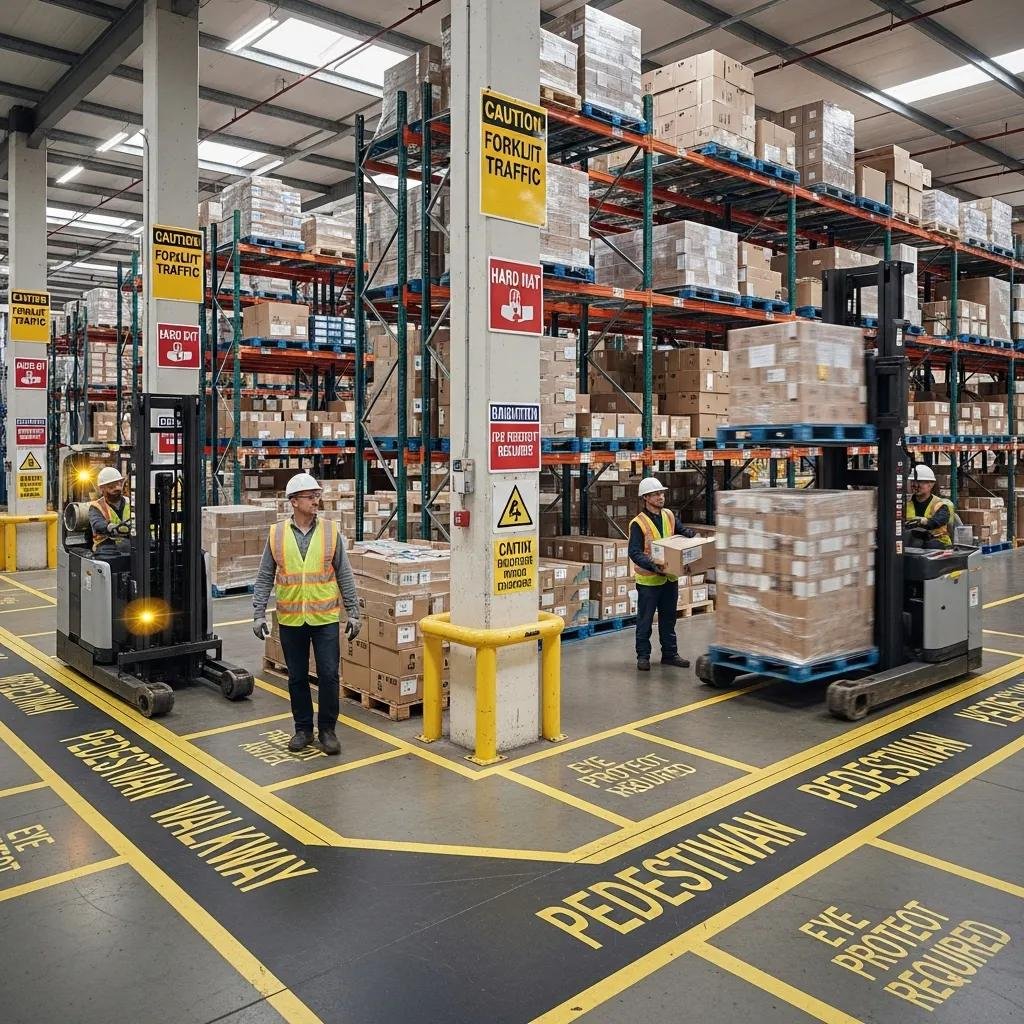
Busy warehouse floors increase the chance of collisions between people and equipment. This article summarises practical protocols, traffic-management tactics and technology to lower that risk.
Table of Contents
ToggleWhat Are the Key Warehouse Safety Protocols to Protect Pedestrians?
Basic controls—clear walkways, consistent lighting and strict forklift rules—cut incidents and reinforce staff awareness.
- Clearly Marked Walkways and Aisles
: Designated pedestrian pathways guide foot traffic away from vehicle zones.
- Proper Lighting
: Adequate, well‑placed lighting improves visibility for pedestrians and operators.
- Forklift Safety Protocols
: Enforce speed limits, sightlines and right-of-way rules for powered industrial trucks.
Quantum Warehouse Solutions specialises in safer, more efficient operations and helps organisations implement tailored protocols.
How Do Pedestrian Zones and Safety Signage Reduce Warehouse Accidents?
Marked pedestrian zones and clear signage separate people from machinery and prompt safer behaviour, which correlates with fewer incidents.
Which OSHA Standards Govern Pedestrian Safety in Warehouses?
OSHA standards that commonly apply include rules for powered industrial trucks, walking‑working surfaces and PPE.
- 29 CFR 1910.178
: Requirements for powered industrial trucks and related pedestrian protections.
- 29 CFR 1910.22
: Rules for maintaining clean, orderly walking‑working surfaces.
- 29 CFR 1910.132
: Employer obligations to provide appropriate PPE, such as high‑visibility clothing and safety shoes.
Meeting these standards reduces risk and liability.
How Can Warehouse Layout Optimization Improve Pedestrian and Forklift Traffic Management?
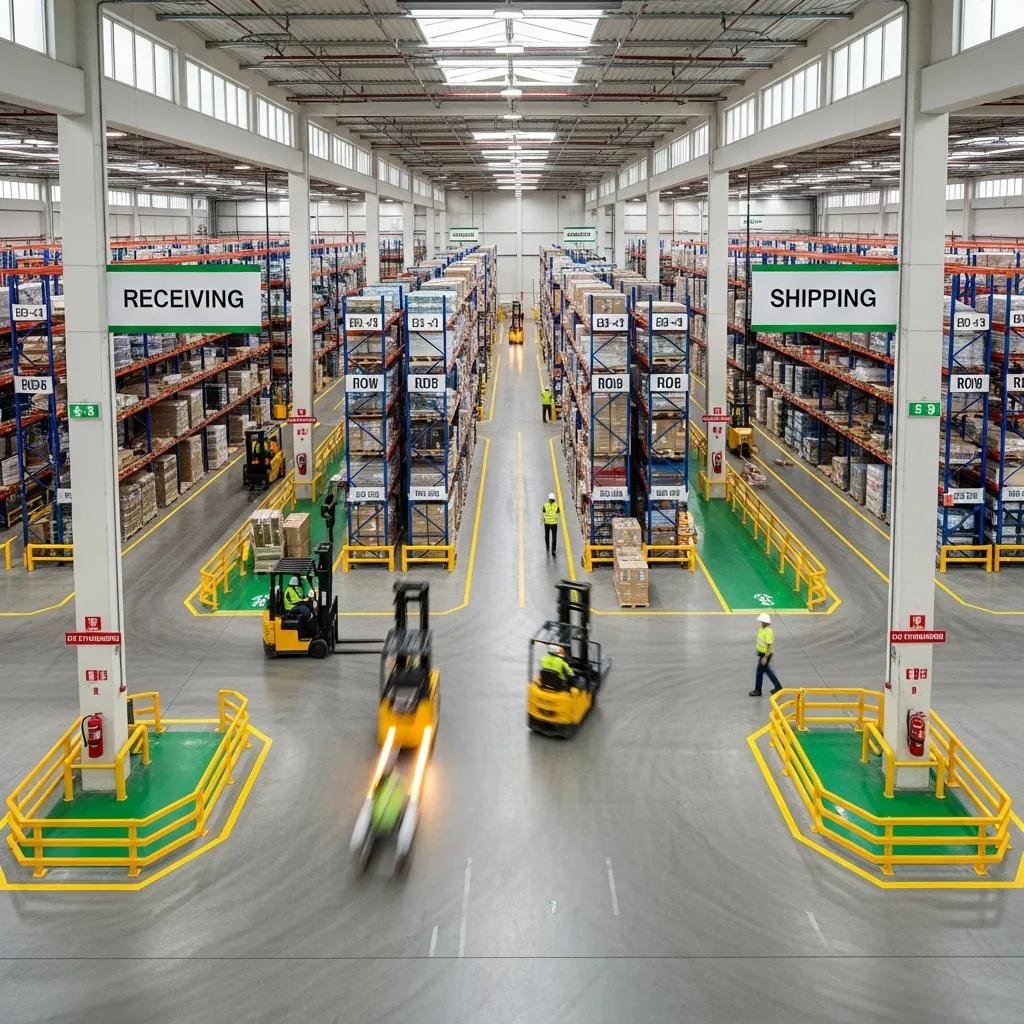
Design choices—routes, aisle widths and reduced clutter—help keep pedestrian and vehicle flows separate and predictable.
- Clear Pathways for Movement
: Keep pedestrian routes unobstructed to reduce conflicts.
- Adequate Aisle Space
: Use sufficient aisle width to avoid congestion between pedestrians and forklifts.
- Minimizing Clutter
: Store items properly to remove trip hazards and sightline obstructions.
Quantum Warehouse Solutions reviews traffic patterns and hazards to design layouts that prioritise pedestrian safety.
What Design Elements Minimize Pedestrian and Vehicle Interaction Risks?
Separation and visibility—barriers, signage and lighting—are the primary design controls to reduce interactions.
- Safety Barriers
: Guardrails and bollards create physical separation.
- Proper Signage
: Clear, consistent signs mark pedestrian zones and vehicle routes.
- Lighting
: Focus lighting on walkways, crossings and loading areas.
These elements work together to make the environment safer.
How Do Safety Audits Inform Effective Warehouse Layout Changes?
Safety audits identify interaction points, compliance gaps and targeted layout fixes that reduce pedestrian risk.
- Identifying Hazards
: Find locations where pedestrian and vehicle paths overlap.
- Compliance Gaps
: Check adherence to applicable OSHA rules and site policies.
- Layout Adjustments
: Implement focused changes from audit recommendations.
Regular audits sustain improvements and drive continuous risk reduction.
What Are the Best Practices for Forklift Pedestrian Safety Training and Hazard Identification?
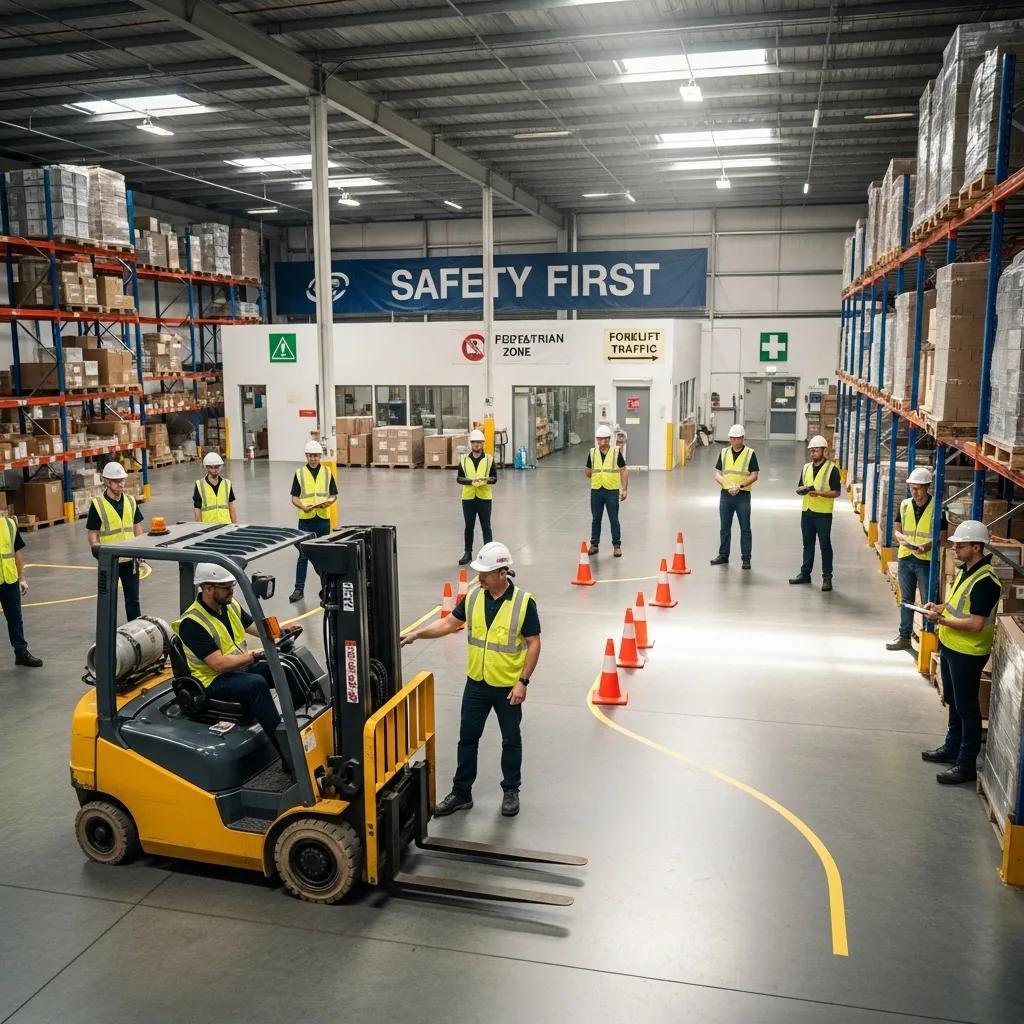
Effective programmes combine clear scope, practical hazard‑spotting and regular refresher training to keep staff alert.
- Scope Definition
: Define roles, responsibilities and expected behaviours for all staff.
- Hazard Identification
: Teach common risk indicators and where to look for them.
- Regular Employee Training
: Schedule repeat sessions and hands‑on practice.
Quantum Warehouse Solutions emphasises routine training to reinforce safe habits.
How Does Forklift Safety Training Enhance Pedestrian Awareness?
Training teaches operators to expect pedestrians and to use safe driving techniques; combining classroom and hands‑on practice is most effective.
- Training Methods
: Mix theory with practical exercises.
- Awareness Improvement
: Frequent drills and reminders maintain vigilance.
These measures support a proactive safety culture.
Which Hazard Identification Techniques Prevent Pedestrian Incidents?
Routine walk‑throughs and task‑based risk assessments quickly reveal issues to prioritise fixes.
- Walk-through Assessments
: Inspect zones during normal operations.
- Risk Evaluation
: Prioritise hazards by likelihood and severity.
Addressing findings promptly prevents incidents.
How Do Safety Technology and Equipment Support Pedestrian Safety in Warehouses?
Technology augments controls by improving compliance, visibility and real‑time awareness of people and assets.
- Compliance with Safety Regulations
: Software helps track and document compliance tasks.
- Real-time Monitoring
: Systems can alert operators to nearby pedestrians.
- Safety Equipment
: PPE and high‑visibility gear increase detectability.
Advanced systems such as Real‑Time Location Systems (RTLS) support tracking of mobile assets and people to reduce collisions.
RTLS for Enhanced Warehouse Safety & Efficiency
Real‑Time Location Systems (RTLS) provide positioning and tracking for forklifts and other mobile assets in a warehouse, enhancing safety and operational efficiency.
Introduction of a real time location system to enhance the warehouse safety and operational efficiency, F Halawa, 2020
Real‑time pedestrian localisation systems can alert pedestrians and vehicle operators to proximity risks and possible collisions.
Real-Time Pedestrian Localization for Warehouse Safety
Some incidents involve pedestrians struck by mobile equipment. Researchers developed a real‑time pedestrian localisation system to track people and alert them and equipment operators to potential collisions.
Development of a real‑time pedestrian localisation system for a warehouse environment, 2016
Quantum Warehouse Solutions integrates appropriate safety technology into consulting to address specific site risks.
What Role Do Safety Barriers and Warning Systems Play in Traffic Management?
Barriers separate people from vehicles; warnings give operators and pedestrians time to react.
- Types of Barriers
: Guardrails, bollards and lane dividers create protected walkways.
- Warning Systems
: Audible and visual alerts highlight hazards and moving equipment.
Sensors that detect people in hazardous zones are increasingly common and effective.
Preventing Forklift-Pedestrian Collisions in Warehouses
To prevent collisions between a forklift and a pedestrian, some organizations have implemented sensor technology. Specific sensors identify a person in a hazardous area and alert the forklift operator.
Minimizing Severe Injury & Fatality Risk in Warehouse Operations, 2021
Installing barriers, sensors and warning systems reduces exposure and supports safer operations.
How Can Emergency Procedures and Safety Audits Leverage Technology for Risk Reduction?
Technology strengthens audits and emergency plans by enabling faster reporting, tracking and record‑keeping.
- Compliance Management Software
: Track tasks, incidents and corrective actions in one place.
- Mobile Inspection Apps
: Capture issues on the floor and trigger immediate follow‑up.
These tools speed responses and help focus resources where they are needed.
For additional safety and efficiency support, consider exploring
Quantum Warehouse Solutions
for comprehensive support.
Frequently Asked Questions
What types of personal protective equipment (PPE) are recommended for warehouse workers?
Common PPE includes high‑visibility clothing, safety shoes, hard hats and gloves; choose equipment based on site hazards.
How can regular training sessions enhance safety culture in warehouses?
Regular, engaging training refreshes procedures, introduces new tools and encourages staff ownership of safety.
What are the benefits of implementing a pedestrian safety management system?
A system improves risk assessment, communication and incident tracking and supports real‑time monitoring of high‑risk areas.
How does clutter in warehouses affect pedestrian safety?
Clutter blocks walkways, reduces visibility and increases trip and collision hazards; keeping areas organised lowers risk.
What role do audits play in maintaining warehouse safety standards?
Audits verify compliance, reveal gaps and generate prioritized actions to maintain a safer workplace.
How can technology assist in emergency response planning for warehouses?
Technology enables rapid communication, real‑time tracking and streamlined incident reporting to improve emergency coordination.
Conclusion
Prioritise pedestrian safety by using clear protocols, optimised layouts and targeted technology. These steps reduce accidents and help meet regulatory requirements; consult specialists for tailored implementation.