Table of Contents
ToggleSafe, stable pallet racking is essential for warehouse operations. This guide covers anchor bolt and slab standards that preserve structural integrity, including anchor bolt types and specifications, slab condition requirements, inspection practices, and how seismic rules affect anchoring methods.
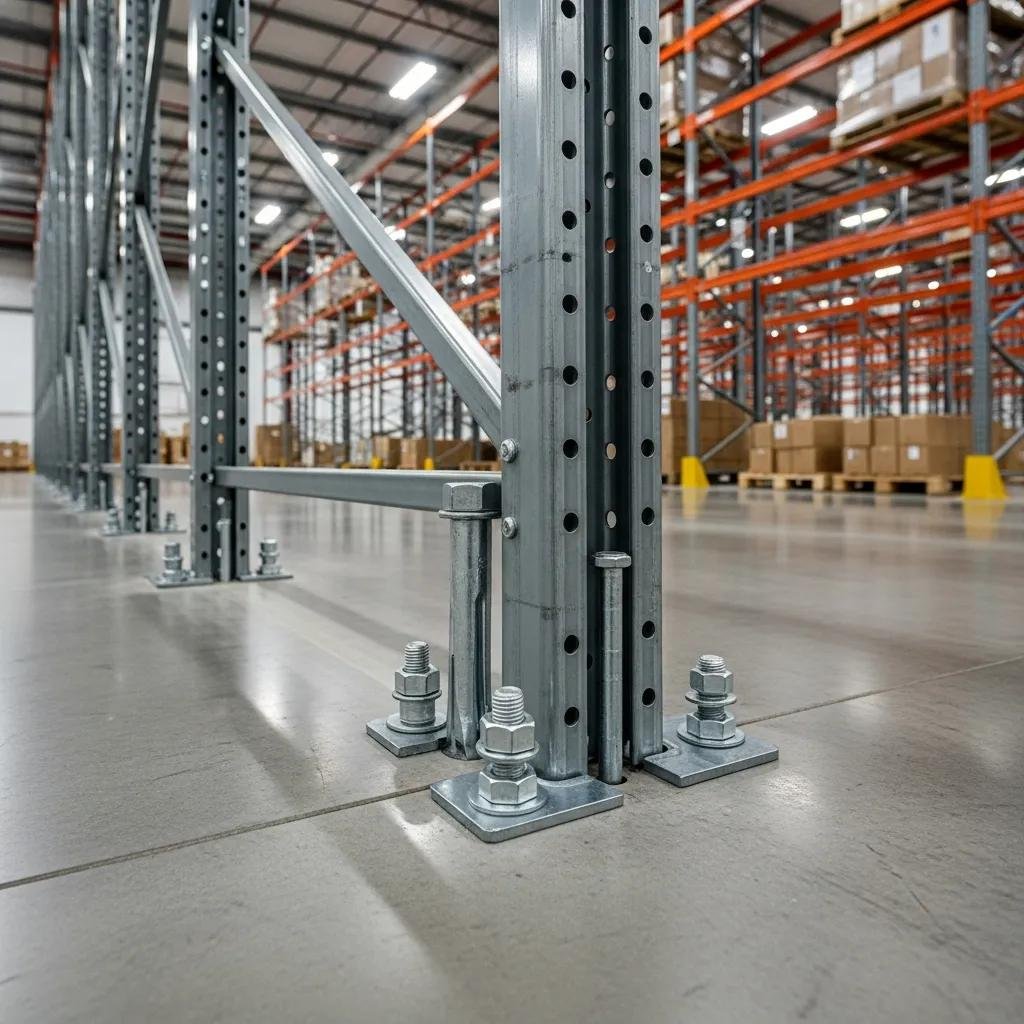
Anchor bolts secure racking to the floor and must meet standards so they can support stored loads and resist applied forces. Key standards address acceptable anchor types, required sizes and proper torque ranges to keep systems secure under load.
Common choices include wedge anchors, sleeve anchors and epoxy-set anchors. A 1/2-inch minimum diameter is typical for many applications, and bolt length should provide proper embedment—generally 4 to 6 inches—based on load and slab thickness.
Quantum Warehouse Solutions provides engineering, installation and safety-compliance services for pallet racking, ensuring anchor selection and installation meet industry standards.
Correct torque prevents under‑ or over‑tightening. For 1/2-inch bolts, a typical range is 50 to 70 foot-pounds. Use high-strength steel anchors, typically galvanized or coated, to resist corrosion and extend service life in warehouse environments.
Design complexities extend beyond these baseline specs, particularly in nonstandard installation scenarios.
Eccentric Anchor Bolt Design for Steel Racks
Steel storage racks are often attached to the concrete floor by anchor bolts placed at eccentric locations. Current rack design specifications provide little guidance for designing such eccentric connections. Determination of the flexural behavior of steel storage rack baseplate upright connections with eccentric anchor bolts, 2021
Slab anchoring codes set minimum thickness and material standards needed for secure anchoring; meeting these rules helps ensure regulatory compliance and the structural integrity of racking installations.
A common minimum slab thickness is 4 inches, though local codes and load demands may require more. Concrete should typically have at least 2,500 psi compressive strength, and reinforced concrete is often recommended to improve stability and reduce cracking.
Research highlights how these variables determine the structural performance of warehouse floors.
Warehouse Floor Slab Thickness Design
The loads induced in the floor slab by the posts supporting the rack, combined with concrete and subgrade properties, dictate required slab thickness and reinforcement. Slab Thickness Design for
Businesses seeking compliance with slab anchoring codes can consult specialists like Quantum Warehouse Solutions for guidance tailored to their facility.
Load capacity and slab condition drive anchoring choices. Heavier loads may require deeper anchors, larger diameters or additional anchor points. If the slab is deteriorated or uneven, chemical anchors or modified installation techniques may be needed to meet safety and code requirements.
Regular inspections identify issues before they become failures. Key checks include bolt integrity, correct torque and the condition of the concrete slab.
Inspect anchor bolts at least annually—and more often in high-traffic or heavy-load zones. Look for corrosion, looseness or visible damage, and re-torque or replace parts as needed.
Address the following checklist items to maintain compliance and safety:
This checklist helps warehouse managers uphold safety standards and demonstrate regulatory compliance.
Seismic and safety standards shape anchoring methods so racking systems can resist earthquake forces and other dynamic loads—a critical concern in seismically active regions.
Seismic requirements often prescribe specific anchor types and installation techniques to improve stability. Measures can include seismic bracing and additional anchor points; compliance with local seismic codes is necessary for safety and legal adherence.
Base plate anchoring and overall structural integrity are key to preventing catastrophic failures in seismic zones.
Base Plate Anchoring & Rack Collapse Prevention
Past collapses of steel storage pallet racking systems underline the need for advanced design methods that consider the specific structural behaviour of these systems.
Seismic behavior of steel storage pallet racking systems, CA Castiglioni, 2016
Apply engineering best practices to improve stability and compliance, including:
Following these practices reduces accident risk and helps keep racking systems efficient and compliant.
For more information on ensuring safety and compliance of your warehouse racking systems, consider exploring the services offered by Quantum Warehouse Solutions.
Improper anchor installation can cause instability, tipping or collapse, risking people and inventory and exposing the business to legal and financial liability. Regular inspections and adherence to installation standards reduce these risks.
Temperature swings, humidity and chemical exposure can affect anchor performance. Thermal movement may loosen bolts, and corrosive conditions can cause rust and degradation. Use corrosion-resistant anchors and inspect regularly to maintain integrity.
Even load distribution prevents excessive stress on individual anchor points. Assess and balance loads so no single bolt is overburdened; this improves safety and extends the system’s service life.
Yes. Seismic-zone regulations often require extra anchor points, seismic bracing and compliance with local building codes to ensure racks withstand earthquake forces and protect people and goods.
Maintain anchor bolts with regular inspections for corrosion, looseness or damage, periodic re-torquing and detailed maintenance records. A proactive schedule prolongs anchor life and reliability.
Evaluate load capacity, slab condition and rack layout to decide on extra anchors. Heavy load concentrations or slab deterioration typically call for additional anchoring. Consult a structural engineer or warehouse safety expert for tailored recommendations.
Knowing rack anchoring requirements reduces the risk of structural failures and improves operational efficiency. Adhere to anchor bolt and slab standards, perform regular inspections, and follow safety regulations to preserve system integrity. For tailored solutions and expert guidance, explore the services offered by Quantum Warehouse Solutions today.