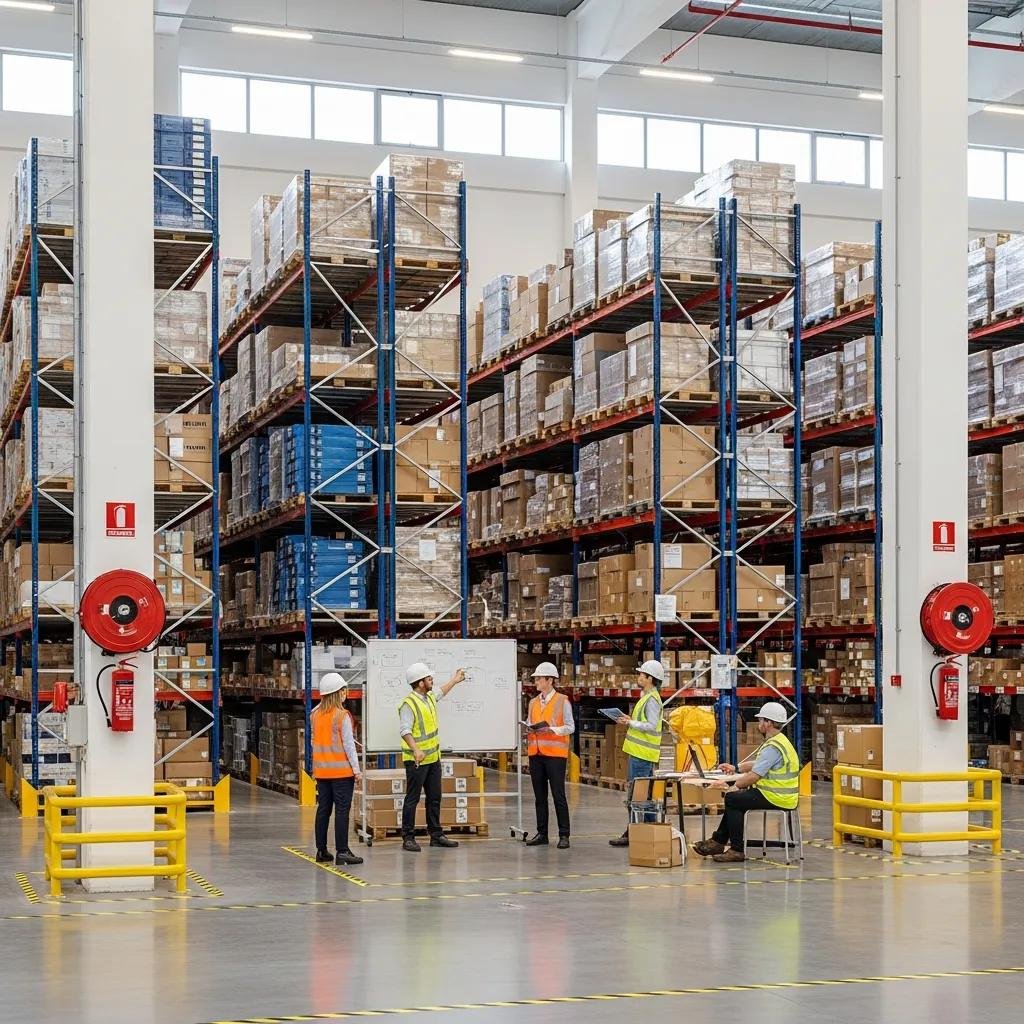

Warehouse safety affects worker wellbeing and operational efficiency. Knowing required PPE, signage standards, and emergency egress rules is essential for regulatory compliance. This article outlines mandatory PPE, clear safety signage, and key egress regulations to help operators reduce risk and comply with OSHA.

What Are the Mandatory PPE Requirements for Warehouse Workers?

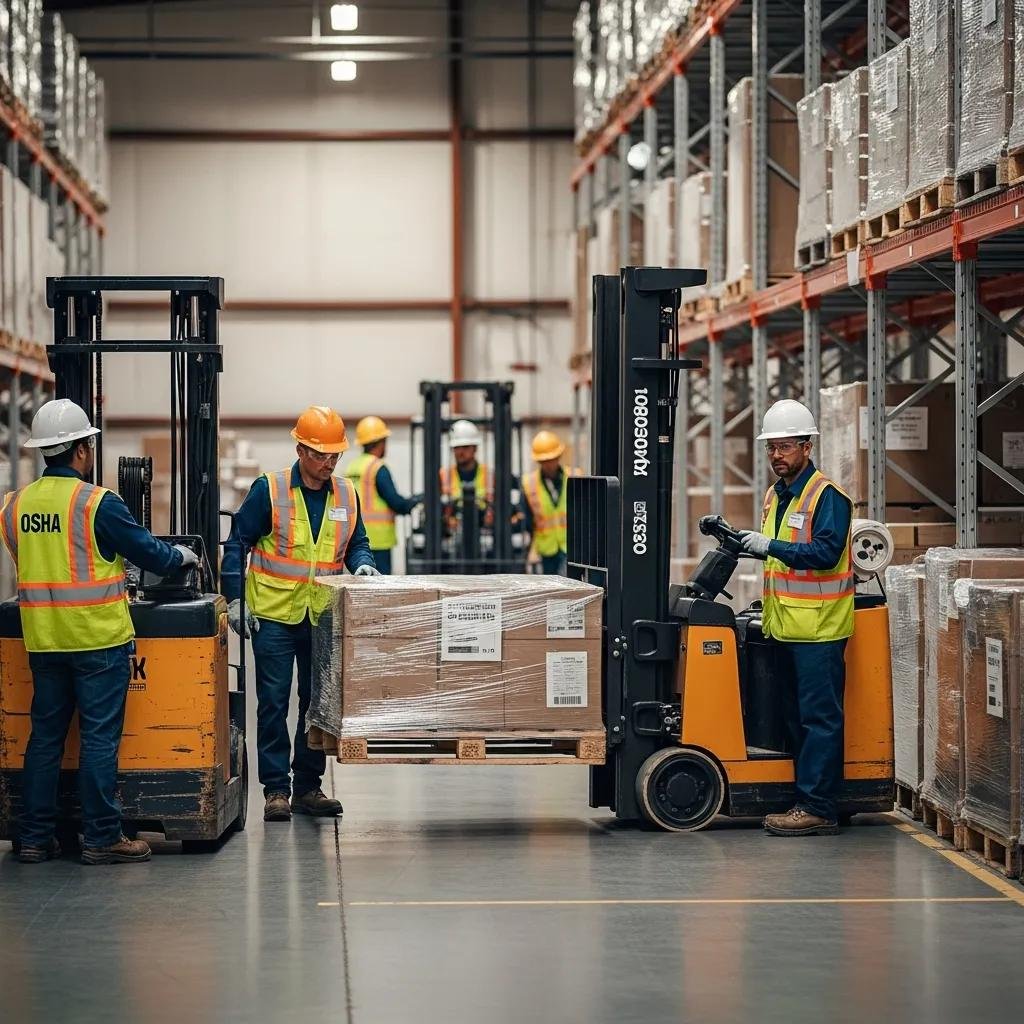
Personal protective equipment (PPE) protects warehouse workers from hazards that cause injury or illness. Under 29 CFR 1910.132, employers must provide suitable PPE. Common items include helmets, gloves, and high-visibility apparel, essential for daily warehouse safety.

Which Types of Personal Protective Equipment Are Required in Warehouses?

In warehouses, several types of PPE are used to limit exposure to common hazards. The essential PPE includes:

  1. Helmets : Protect against head injuries from falling objects.
  2. Gloves : Safeguard hands from cuts, abrasions, and chemical exposure.
  3. High-Visibility Apparel : Ensures workers are easily seen, especially in areas with moving machinery.

Training and regular inspections ensure PPE is used, maintained, and replaced when damaged.

How to Select OSHA-Compliant PPE for Warehouse Safety

Select OSHA-compliant PPE by confirming fit, availability, and applicable certification. Offer training on proper wear and maintenance and schedule routine inspections to replace damaged items.

Beyond selection, practical training on use, storage, and maintenance is necessary for a compliant PPE program.

OSHA Compliant PPE & Respiratory Protection

Before selecting a respirator, hazards in the workplace must be evaluated. Employees need to know how to inspect, maintain, and store personal protective equipment like respirators, glasses, and goggles to ensure an OSHA Compliant Respiratory Protection Program.

Warehousing & storage safety, 2010

How Do Warehouse Safety Signage Standards Ensure Hazard Communication?

Safety signage communicates hazards and required precautions. Clear, OSHA- and ANSI-compliant signs reduce accidents by telling workers what risks exist and how to respond.

What Are the Key OSHA and ANSI Signage Requirements for Warehouses?

Safety signage in a warehouse highlighting OSHA and ANSI compliance

Key OSHA and ANSI signage requirements for warehouses include:

  1. Proper Labeling of Hazardous Materials : Ensures that workers are aware of the risks associated with specific substances.
  2. Clear Communication of Safety Protocols : Signage must convey safety instructions in a straightforward manner.
  3. Emergency Exit Signage : Clearly marked exits are essential for safe evacuation during emergencies.

Together, these measures ensure consistent hazard communication across the facility.

OSHA highlights proper hazardous materials labeling as a foundational safety requirement in warehouse operations.

OSHA Hazards & Labeling in Warehouse Operations

Warehousing and storage facilities rank high on OSHA’s list of potential hazards associated with warehouse operations. All hazardous materials containers should be properly labeled.

Breathing the Fresh Air of Compliance: Establishing an OSHA Compliant Respiratory Protection Program, 2015

How to Implement Effective Safety Signage for Hazard Zones

Implement effective signage by following a few practical steps:

  1. Clear Marking of Emergency Exits : Ensure that all emergency exits are easily identifiable and accessible.
  2. Proper Labeling of Hazardous Materials : Use standardized labels to indicate the presence of hazardous substances.
  3. Designating Walkways : Clearly mark walkways to prevent accidents and ensure safe movement throughout the warehouse.

These steps help meet signage standards and reduce risk.

What Are the Essential Emergency Egress Regulations for Warehouses?

Emergency exit in a warehouse demonstrating compliance with egress regulations

Emergency egress rules require unobstructed, clearly signed exit routes so workers can exit safely during incidents.

How to Comply with OSHA Standards for Warehouse Emergency Exits?

To comply with OSHA standards for emergency exits, warehouse operators should:

  1. Maintain Clear Exit Routes : Ensure that all exit paths are unobstructed at all times.
  2. Conduct Regular Inspections : Regularly check exit routes and signage to ensure compliance with safety standards.
  3. Provide Proper Signage : Clearly mark all emergency exits with appropriate signage.

These steps help personnel evacuate quickly and safely.

What Are Best Practices for Emergency Evacuation Planning and Signage?

Best practices for evacuation planning include:

  1. Developing a Detailed Evacuation Plan : Outline clear procedures for evacuating the warehouse in an emergency.
  2. Conducting Regular Training : Provide training sessions for employees to familiarize them with evacuation procedures.
  3. Maintaining Adequate Aisle Space : Ensure that aisles are wide enough to facilitate quick evacuation.

These practices improve readiness and reduce evacuation time.

Research supports using simulation modelling to optimise evacuation strategies and fold them into preparedness plans.

Warehouse Evacuation Planning & Simulation

The purpose of the research was to demonstrate the feasibility of using an application for modeling the evacuation of people, for the decision support process during the development of emergency preparedness plans requiring the evacuation of products from the warehouse. Design/methodology/approach: Pathfinder software was used during the analysis. It allowed mapping the space of an example warehouse and simulating the movement of internal transport (forklifts) in it. The study was conducted for sample scenarios of events requiring evacuation. Findings: Simulations of product evacuation in the warehouse made it possible to determine evacuation times. A categorization of production by value was made, establishing different sequences of their removal from the warehouse. This made it possible to optimize the location of products in the warehouse and the actions of forklift operators during evacuation. These findings can be incorporated into the emergency response plan required in safety management systems.

SIMULATION MODELING OF EVACUATION IN DEVELOPING AN EMERGENCY PREPAREDNESS PLAN., G Dahlke, 2023

How Can Warehouse Safety Audits and Training Improve Compliance?

Regular audits and targeted training reveal hazards, equip staff to follow protocols and use PPE correctly, and strengthen safety culture.

What Is Included in a Comprehensive Warehouse Safety Compliance Audit?

A comprehensive warehouse safety compliance audit typically includes:

  1. Structural Assessment : Evaluating the physical condition of the warehouse and identifying potential hazards.
  2. Safety Protocol Review : Assessing existing safety protocols and their effectiveness.
  3. Documentation Check : Ensuring that all safety-related documentation is up to date and compliant with regulations.

They identify improvements and support ongoing compliance.

How Does Safety Training Support PPE and Emergency Egress Requirements?

Safety training ensures employees know PPE use and evacuation procedures. Effective programs cover:

  1. Knowledge of Safety Protocols : Employees must be aware of the safety protocols in place.
  2. Proper PPE Usage : Training should emphasize the correct use and maintenance of PPE.
  3. Emergency Response Plans : Employees should be familiar with evacuation procedures and emergency response plans.

Training improves compliance and reduces accidents.

For more information on warehouse solutions , Quantum Warehouse Solutions offers services to optimize operations and safety.

Frequently Asked Questions

What are the common hazards faced by warehouse workers?

Common hazards include slips, trips, and falls from wet or uneven surfaces. Forklifts and other heavy machinery pose collision risks. Workers also face exposure to hazardous materials, repetitive strain from lifting, and injuries from falling objects. Recognising these hazards guides effective control measures.

How often should safety training be conducted in warehouses?

Safety training should be regular and recurring. Annual sessions are a baseline, with extra training when new equipment arrives or regulations change. Run refresher courses after incidents or near misses to reinforce safe practices.

What role does employee feedback play in improving warehouse safety?

Employee feedback reveals on-the-ground hazards and assesses how controls work in practice. Encouraging open reporting helps managers fix issues quickly and improves procedures. This collaboration boosts both safety and staff engagement.

What are the consequences of non-compliance with warehouse safety regulations?

Non-compliance can bring legal penalties, fines, and greater employer liability. OSHA citations and monetary penalties can be costly. Worse, non-compliance increases the risk of workplace injuries or fatalities, harming morale and reputation. Staying compliant protects people and business continuity.

How can technology enhance warehouse safety compliance?

Technology enhances compliance through tools like automated monitoring, training platforms, and wearables. Real-time monitoring flags hazards, interactive training improves retention, and smart PPE can detect unsafe conditions. These systems make it easier to enforce standards and prevent incidents.

What should be included in a warehouse emergency response plan?

A robust emergency response plan covers procedures for fires, chemical spills, and natural disasters. It should map evacuation routes, set assembly points, and assign roles. Regular drills and clear communication protocols ensure staff can respond effectively.

Conclusion

Proper PPE, clear signage, and compliant emergency egress rules are central to protecting workers and meeting regulations. Implementing these measures with training and audits reduces risk and supports efficient operations. Consult available resources to further improve warehouse safety.