Table of Contents
ToggleWarehouse Fire Code Basics for Storage Systems
Warehouse fire codes are the baseline for safety and regulatory compliance in storage systems. They set standards for fire prevention and response to protect people and property. This article summarizes the main fire-safety rules, compliance steps, sprinkler requirements, and practical risk-management tactics. While rules can be complex, clear practices and the right knowledge reduce fire risk.
What Are the Key Warehouse Fire Safety Regulations?
Fire safety rules for warehouses reduce hazards and keep workplaces safe. They cover requirements such as fire suppression systems, correct aisle spacing, and routine inspections. Following these rules protects assets and the people who work in and visit the facility.
Overview of Fire Safety Standards for Warehouses
Fire safety standards for warehouses include core elements that support prevention and rapid response. These standards highlight:
- Fire Suppression Systems: Implementing systems such as sprinklers and fire alarms to detect and control fires promptly.
- Aisle Spacing Requirements: Maintaining adequate spacing between storage units to allow safe evacuation and firefighting access.
- Documentation and Permits: Keeping accurate records of inspections, maintenance, and compliance with local fire codes.
Together, these standards make warehouses safer and reduce the likelihood of major incidents.
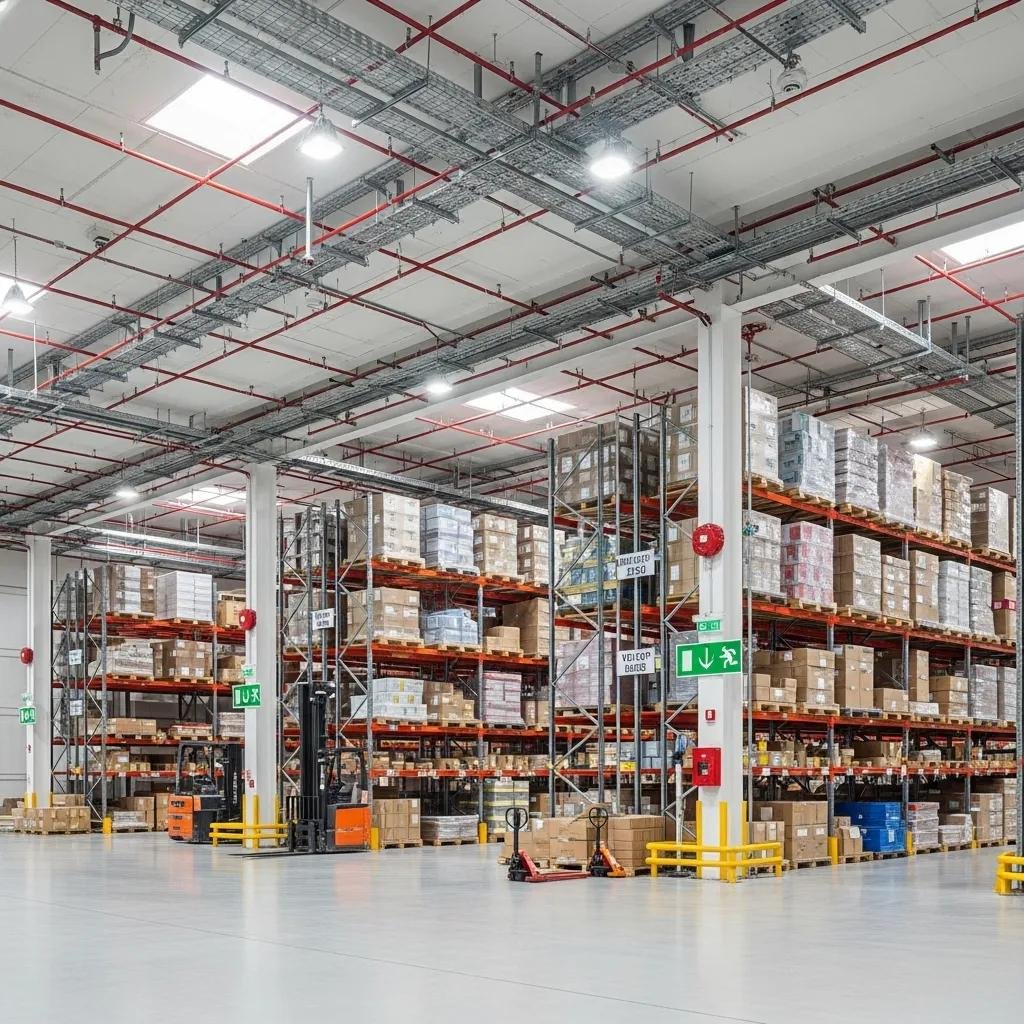
Warehouse Fire Protection & Life Safety Design Evaluation
This report provides a full evaluation of the fire protection and life safety design for a warehouse supporting a large construction project. The findings and conclusions are documented and supported by analysis where needed.
Construction Warehouse, 2014
How to Ensure Fire Code Compliance in Warehouse Storage Systems?
Achieving compliance requires a system of audits, training, and preventive actions. Regular checks and clear procedures uncover hazards and keep the facility within code.
- Preparation and Documentation Review: Gather previous reports and maintenance records.
- Hazard Identification and Risk Evaluation: Assess layout, storage, and suppression systems.
- Follow-up Monitoring: Implement corrective actions and re-inspect.
What Are Warehouse Sprinkler Requirements for Fire Prevention?
Sprinkler systems are a core part of warehouse fire protection. Proper installation and maintenance are essential for compliance and safety.
- Sprinkler Systems: Automatic fire suppression response.
- Water Mist Systems: Fine droplets reduce damage while cooling fires.
- Fire Alarms: Early detection and alerts.
Selecting and maintaining the right system improves fire response and reduces damage.
How Can Warehouse Owners Manage Fire Risks Effectively?
Managing fire risk protects both assets and people. A structured approach improves safety and readiness.
- Evaluate Storage Layout: Ensure compliance with fire codes.
- Develop Evacuation Plans: Define clear escape routes.
- Maintain Compliance: Regularly review and update safety systems.
Conclusion
Following warehouse fire codes protects people and assets. Installing proper systems, maintaining documentation, and performing audits significantly reduce fire risk and improve safety compliance.