
Learn the most commonly overlooked warehouse safety regulations and how to stay compliant.
In today’s fast-paced logistics and fulfillment industry, it’s easy for warehouse managers to focus solely on speed and efficiency. However, failing to adhere to critical warehouse safety regulationscan result in costly fines, injuries, or worse, fatal accidents.
Operational safety isn’t just a legal requirement. It’s a business imperative. In this blog, we’ll highlight often-overlooked safety rules, explain how to remain compliant, and offer guidance on creating a safer, more productive warehouse environment.
Why Warehouse Safety Matters
Every year, thousands of warehouse employees are injured due to unsafe conditions, from forklift accidents to falling pallets and poorly lit aisles. Beyond the human cost, businesses also face:
- Fines from regulatory bodies like OSHA
- Increased workers’ compensation premiums
- Lost productivity from work stoppages
- Damaged reputation
Prioritizing warehouse safety regulations isn’t just about compliance. It’s about maintaining operational integrity.
Commonly Overlooked Warehouse Safety Regulations
Many warehouses follow basic guidelines but still miss these critical areas:
- Forklift Certification & Maintenance
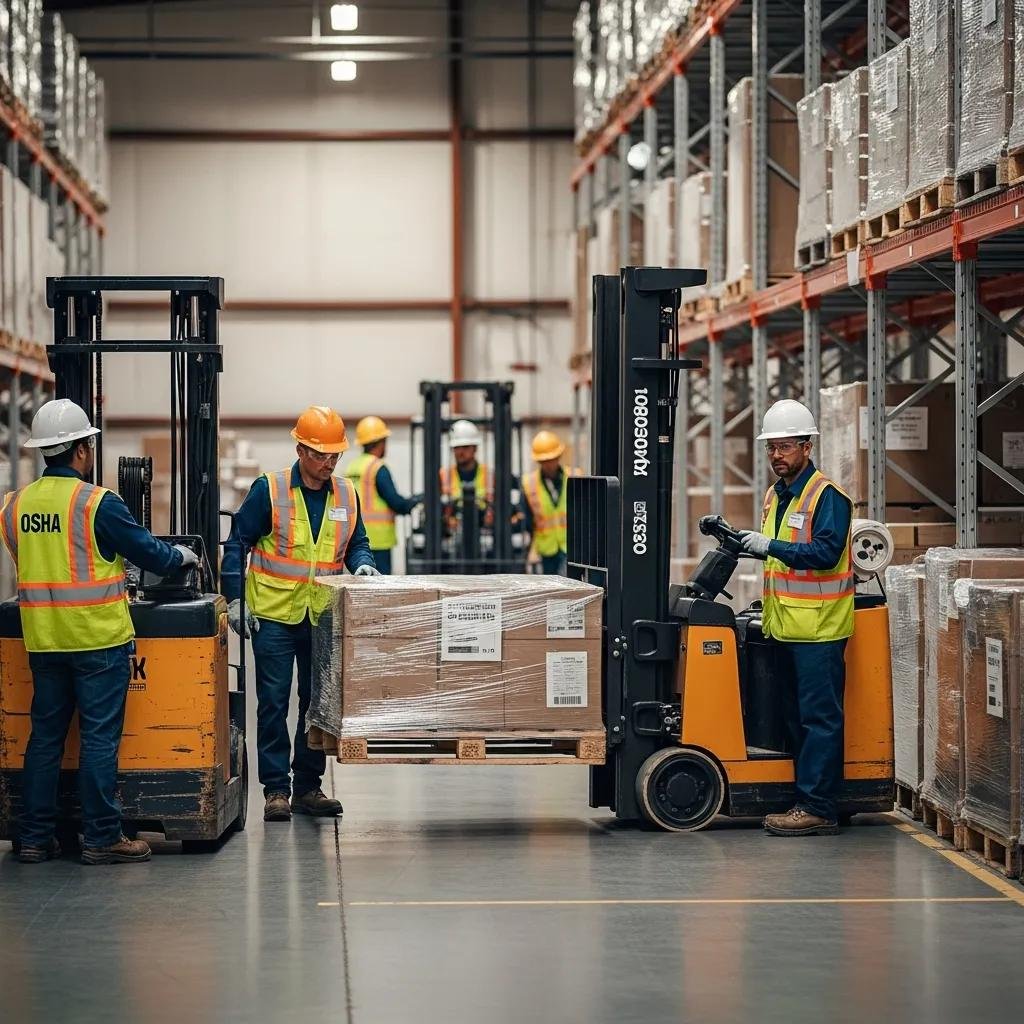
Operators are required to obtain certification and complete retraining every three years. Forklifts also need daily inspection logs. Failure to do so is one of OSHA’s most cited violations.
- Racking System Compliance
Improperly loaded or overloaded racks can collapse, especially if they aren’t secured to the floor. Be sure your racking meets ANSI/RMI standards and is regularly inspected.
- Poorly Marked Walkways and Aisles
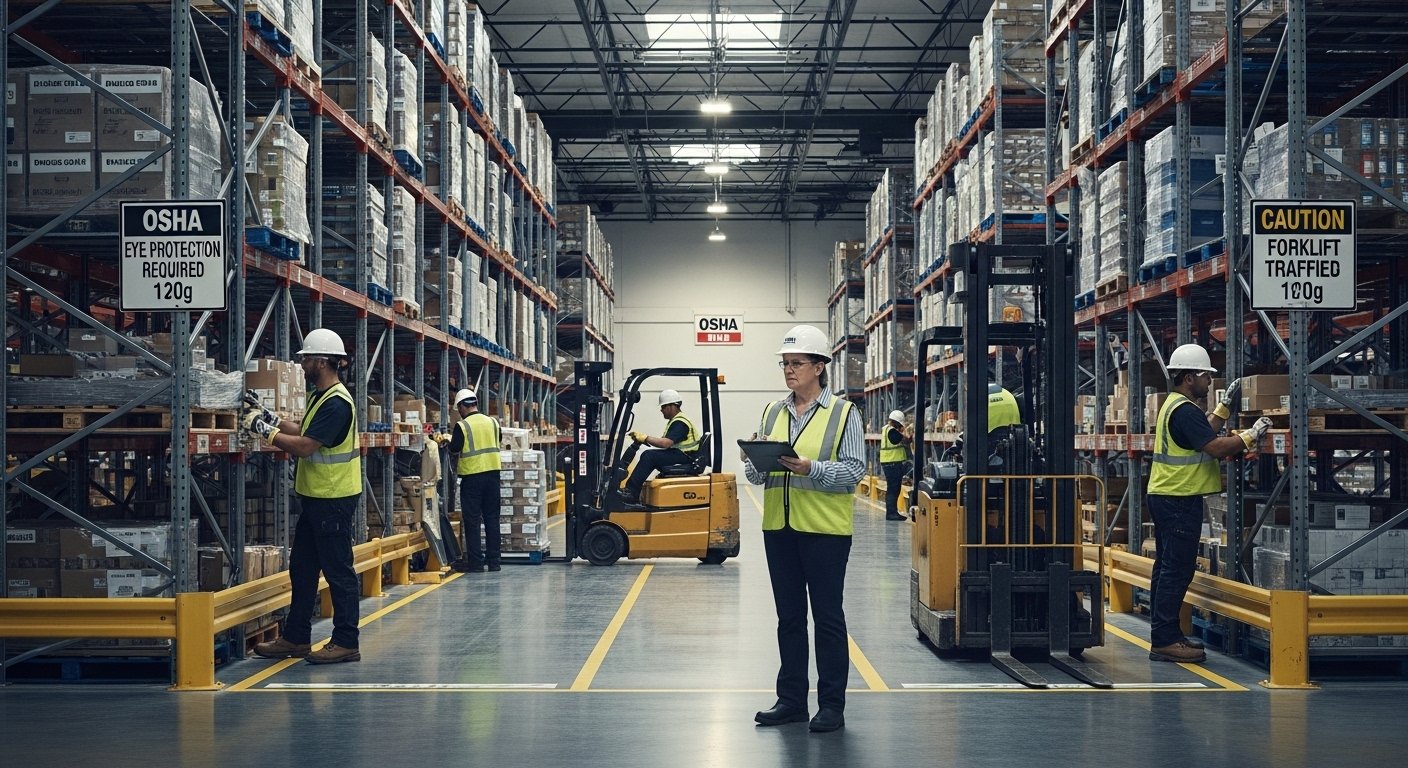
Designate walkways clearly to ensure pedestrians are kept separate from operating equipment. Inadequate visibility increases the risk of collision injuries.
- Inadequate Fall Protection
Mezzanines, ladders, and loading docks must include fall protection equipment like guardrails or safety harness systems. Many warehouses fail to enforce this consistently.
- Emergency Exit Access
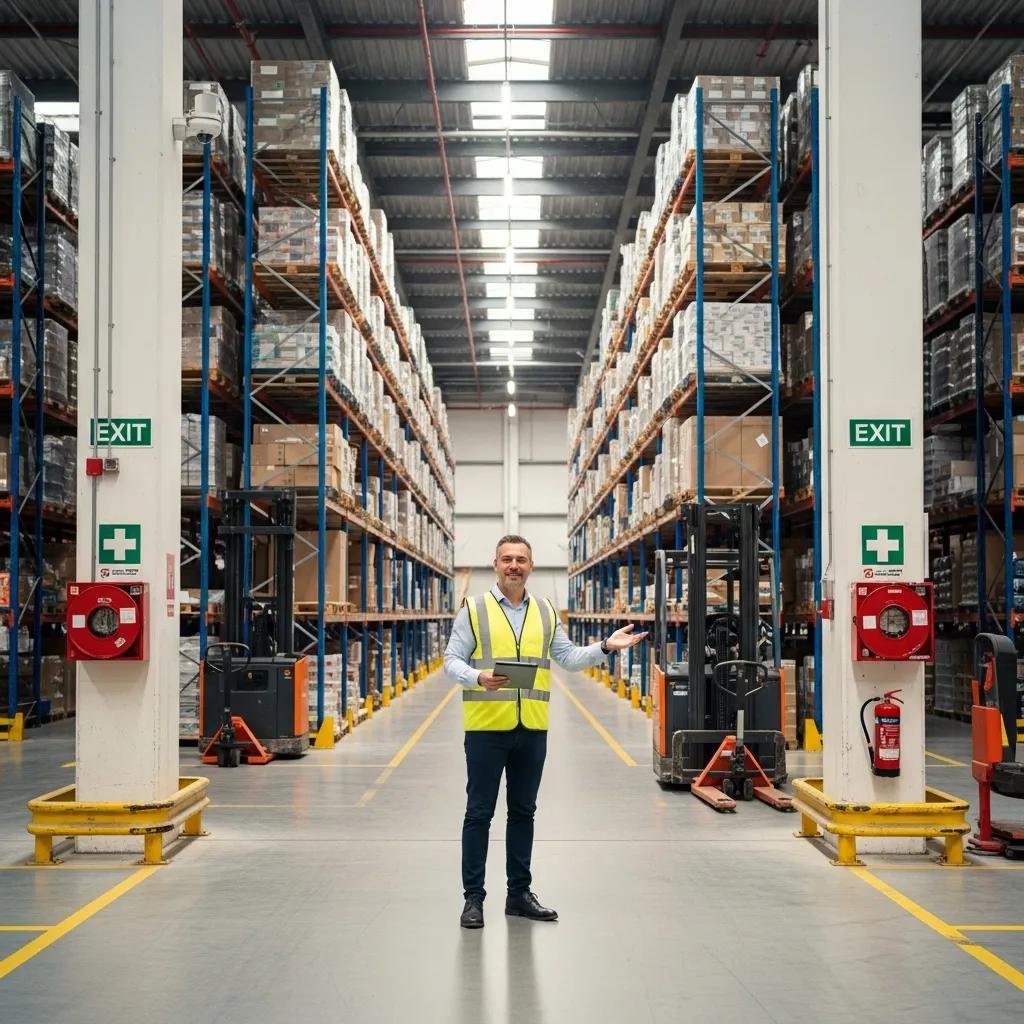
OSHA requires all exit routes to be free of obstructions. Warehouses often overlook blocked exits, especially during peak shipping seasons.
- Improper PPE Usage
Ensuring the availability of Personal Protective Equipment (PPE) is not enough. Workers must be trained and monitored for consistent usage.
OSHA Standards Every Warehouse Must Follow
The Occupational Safety and Health Administration (OSHA)enforces specific regulations for general warehousing under 29 CFR 1910. Key standards include:
- 1910.178 – Powered industrial trucks (forklift safety)
- 1910.22 – Walking-working surfaces
- 1910.132 – PPE and hazard assessments
- 1910.157 – Portable fire extinguishers
- 1910.305 – Electrical wiring and systems safety
Not following the rules may result in fines ranging from thousands to hundreds of thousands of dollars.
Tips for Staying Compliant
To maintain a safe and compliant facility:
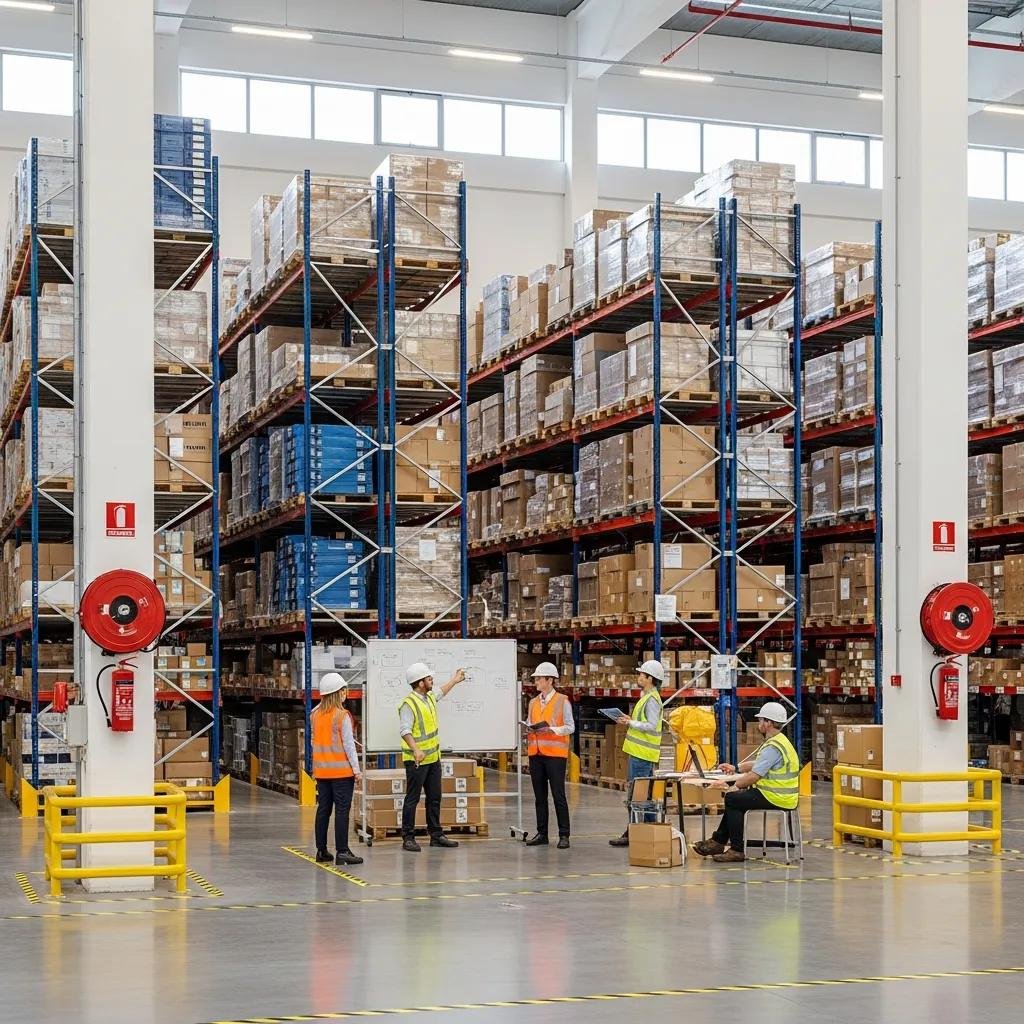
- Conduct routine safety audits
- Train (and retrain) your team regularly
- Post safety signage at strategic locations
- Use proper lighting and reflective paint
- Install warehouse safety barriers around high-traffic zones
- Keep updated logs for all equipment inspections
- Use automation tools to reduce manual handling risks
Quantum Warehouse Solutions can help assess your current warehousingplan and recommend upgrades tailored to your facility.
Partnering with Quantum for Safety Solutions
At Quantum Warehouse Solutions, we offer peace of mind. Our team can help you design warehouse layouts that maximize space while prioritizing compliance with warehouse safetyregulations.
We offer:
- Racking Permit Application:We handle the preparation and submission of racking permit applications to ensure fast, accurate approvals.
- Permit Application Assistance:Our team guides you through every step of the permit process, helping you avoid delays and costly errors.
- Compliance Audits:We perform thorough audits to verify your systems meet all local codes and safety regulations.
Whether you’re building a new warehouse or upgrading an existing one, our team is here to ensure your operation meets and exceeds industry safety standards.
Key Takeaways for OSHA Compliance and Warehouse SafetyConclusion
Ignoring warehouse safety regulations can lead to serious consequences, both legally and operationally. But staying compliant doesn’t have to be overwhelming. By identifying common pitfalls and taking proactive steps, you’ll foster a safer, more efficient workspace for your entire team.
Need help making your warehouse OSHA-compliant? Visit Quantum Warehouse Solutionstoday. Let us help you create a smarter, safer warehouse from the ground up.