
Learn whether your warehouse requires a racking permit in Texas and how to apply for one.
Warehouse operations in Texas are subject to a variety of regulatory standards designed to protect property, personnel, and public safety. One often-overlooked requirement is the need for warehouse racking permits. Whether you’re installing new storage systems or modifying existing ones, understanding the local code is essential.
This article outlines when warehouse racking permits in Texas are required, particularly for facilities with high pile storage systems, and provides guidance on staying compliant.
What Are Warehouse Racking Permits?
A warehouse racking permit is an official authorization from a local jurisdiction that approves the installation of industrial shelving or racking systems within a facility. The permit ensures the racking system complies with local:
- Building codes
- Fire codes
- Occupational safety standards
Permits are typically required when racking systems exceed a certain height or involve structural or fire safety considerations. The goal is to prevent collapses, improve emergency access, and ensure that fire suppression systems function effectively in the event of an emergency.
Do You Need a Racking Permit in Texas?
Although permitting requirements differ depending on the location, some common guidelines are generally applicable.
- Height: Racks exceeding 8 to 12 feet typically need a permit.
- Permanence: Fixed, bolted, or anchored systems typically need approval.
- Load: Systems that store large or heavy materials, especially stacked vertically, may fall under stricter scrutiny.
- Hazard classification: Facilities storing flammable, combustible, or hazardous goods must adhere to additional guidelines.
Some cities have their own permitting processes. Always consult the Authority Having Jurisdiction (AHJ) for your location before proceeding with any installation.
High Pile Storage and Fire Code Compliance
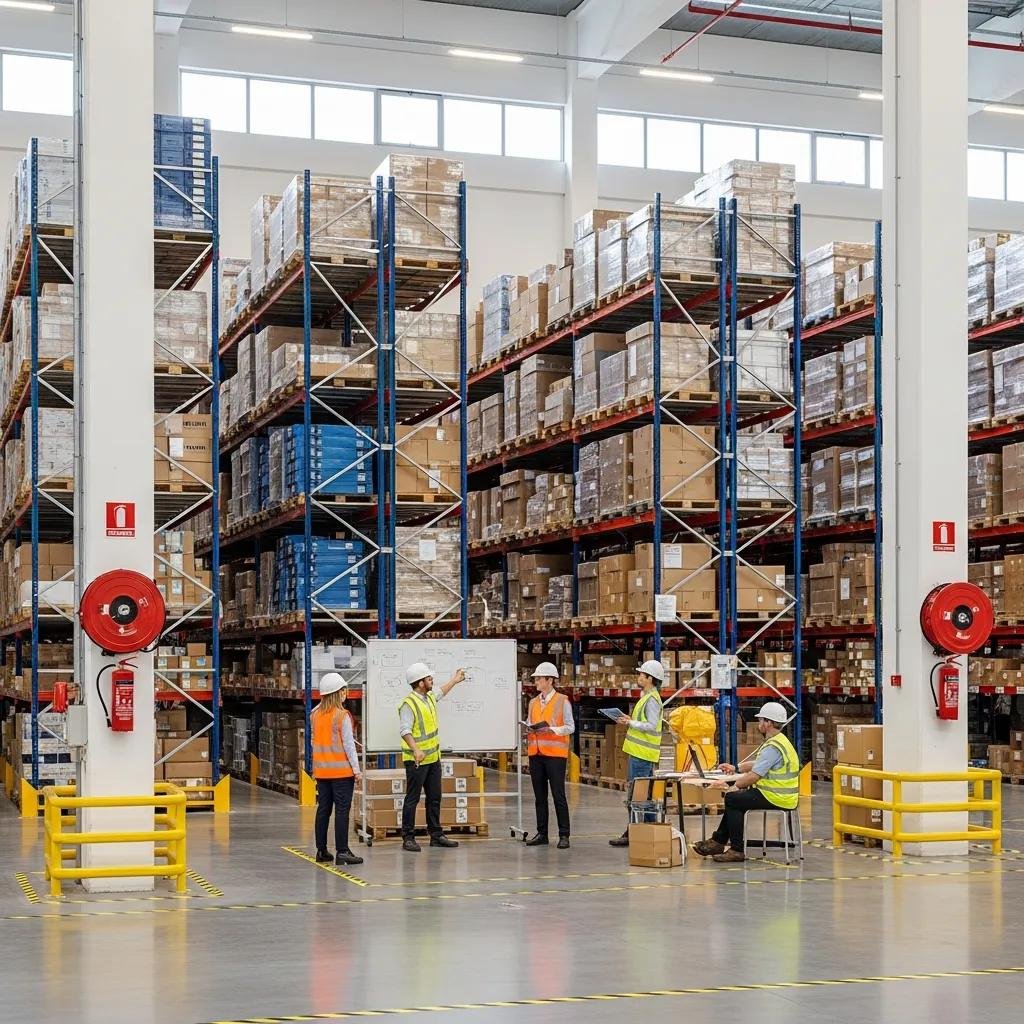
High pile storage involves storing materials in racks above a certain height, commonly over 12 feet. These systems pose distinct fire hazards, leading to heightened attention and control from regulatory authorities.
Under the International Fire Code (IFC), which is adopted with local amendments in many parts of Texas, high pile storage requires:
- Automatic sprinkler systems with proper coverage
- Smoke and heat vents for fire detection and evacuation
- Aisle spacing to allow for firefighting equipment and personnel
- Detailed floor plans showing the storage layout, access paths, and fire equipment
Failure to comply with fire safety requirements can delay occupancy permits and increase insurance premiums or even void coverage entirely.
Permit Requirements in Texas Warehouses
When applying for warehouse racking permits in Texas, expect to submit the following documentation:
- Scaled floor plans of the racking system layout
- Engineer-stamped structural calculations verifying rack integrity under maximum loads
- Product data sheets outlining materials and specifications
- Commodity classification details (especially for high pile storage)
- Fire suppression plans, if applicable
- Egress routes and aisle spacing, per code
- Seismic considerations, where applicable (though Texas generally has lower seismic risk)
Inspectors will verify that your installation aligns with these documents and adheres to code.
How to Apply for a Racking Permit
The permitting process might seem overwhelming at first, but approaching it step by step can help simplify the experience:
- Determine Requirements: Contact your local building or fire department to confirm whether a racking permit is needed.
- Hire a Qualified Engineer: Engage a licensed structural engineer to produce drawings and load analysis.
- Prepare Application Materials: Gather all necessary documentation, including layout plans, material specs, and fire protection measures.
- Submit to the AHJ: Send your application to the appropriate local agency. Turnaround times vary by city.
- Schedule Inspections: Upon approval and installation, a final inspection is typically required before use.
Permits must be obtained before installation. Post-installation applications may result in fines or additional corrective work.
Consequences of Non-Compliance
Failing to obtain a required racking permit can lead to serious operational and financial consequences, including:
- Fines and penalties from city or fire officials
- Stop-work orders halting operations until compliance is achieved
- Insurance issues, including denial of claims or policy cancellation
- Potential legal responsibility in cases of accidents, injuries, or fire incidents.
Most importantly, unpermitted systems may jeopardize the safety of your employees and your facility.
Conclusion
Whether you’re expanding an existing facility or building a new one, compliance with warehouse racking permits in Texas is a non-negotiable part of your project. This is especially true for warehouses with high pile storage systems, where fire safety and structural stability are under greater scrutiny.
By understanding permit requirements, preparing the correct documentation, and working with the right professionals, you can keep your operations legal, efficient, and safe.
Want help navigating the permit process? Visit our Racking Permit Services page to learn how we support Texas warehouse operators with code-compliant solutions.