Warehouse Egress Requirements Explained
Warehouse egress rules protect employees and keep your facility within regulatory requirements. They govern how a warehouse is designed and maintained so people can evacuate quickly in an emergency, reducing accidents and helping you stay code-compliant. This article covers key OSHA standards, fire codes, steps to build a safety compliance checklist, and the risks of non-compliance.
For expert consulting and implementation services focused on warehouse safety and regulatory compliance, Quantum Warehouse Solutions specializes in tailored solutions for warehouse environments.
What Are the Key OSHA Warehouse Egress Standards?
OSHA publishes standards for warehouse egress that ensure safe exit routes during emergencies. These cover emergency exit access, walking-working surfaces, and fire safety requirements. Meeting OSHA rules reduces risk and creates a safer workplace.
How Many Emergency Exits Are Required in a Warehouse?
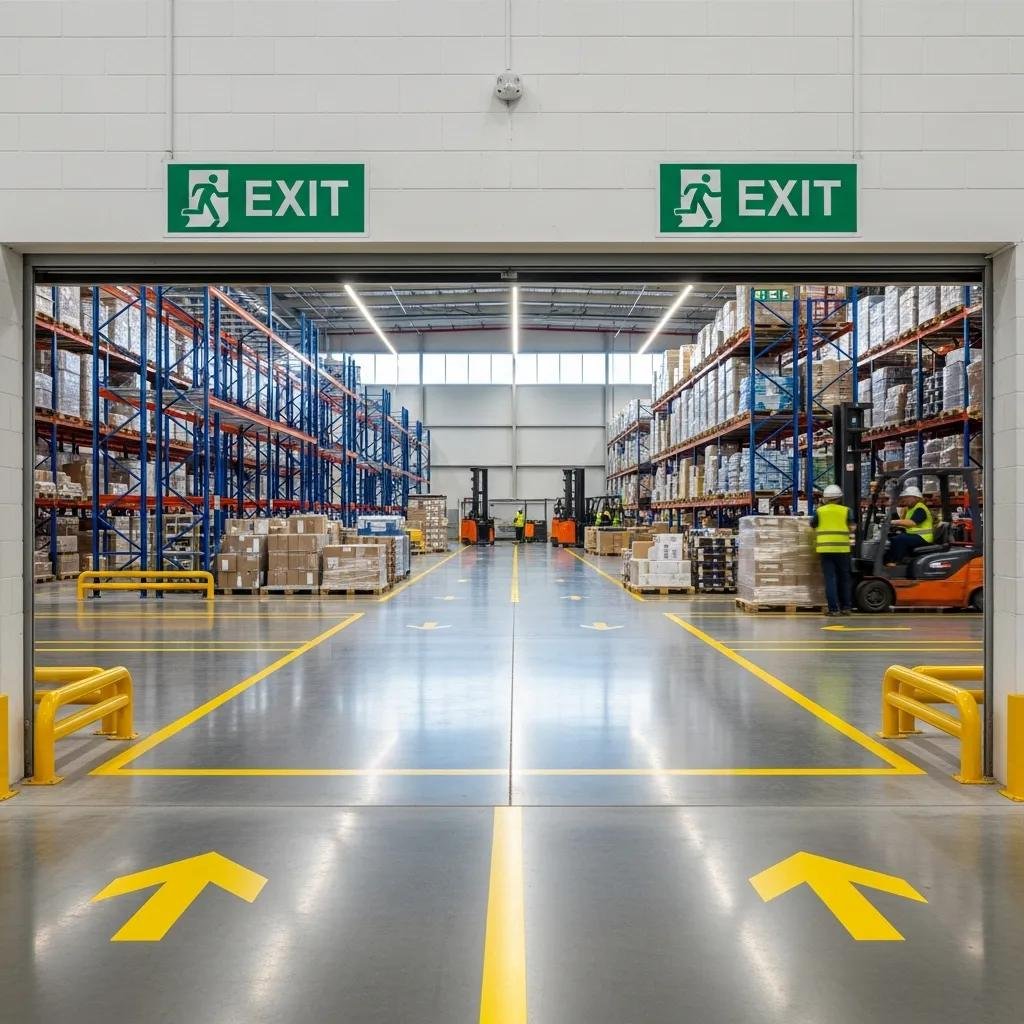
OSHA requires a minimum number of emergency exits based on occupancy. Typically, warehouses with capacity over 100 people need at least two exits; all exits must be clearly marked and accessible at all times.
A report highlights how occupant load affects fire protection and life-safety design for a warehouse.
Warehouse Fire Protection & Life Safety Design
This report evaluates the fire protection and life-safety design of a warehouse serving a large construction project. The calculated occupant load for this building is 466 occupants.
Construction Warehouse, 2012
What Are the Minimum Exit Width and Aisle Requirements?
Minimum exit width depends on occupant count and facility layout. Generally, each exit should be at least 28 inches wide to allow safe passage, and aisle widths should be maintained so exit routes remain clear; a 36-inch minimum is commonly recommended for safe movement.
Which Fire Safety Codes Govern Warehouse Emergency Exits?

Fire safety codes set requirements for exit routes to minimise hazards and support safe evacuation during fires. Complying with these codes protects people and property.
How Do NFPA Fire Codes Apply to Warehouse Egress?
NFPA codes guide the design and maintenance of warehouse exit routes, covering accessibility, signage, and keeping pathways clear. Following NFPA standards helps ensure warehouses can respond effectively to fire emergencies.
What Are Warehouse Exit Door Regulations Under Building Codes?
Building codes specify exit door size, hardware, and accessibility. Exit doors must swing outward and use panic hardware to speed egress; complying with these rules helps employees exit safely in an emergency.
How to Prepare a Warehouse Safety Compliance Checklist for Egress?

Build a safety compliance checklist in clear steps to confirm all egress measures are in place. A checklist makes it easier to maintain OSHA and fire-code compliance.
What Are the Steps for Conducting a Warehouse Safety Inspection?
A warehouse safety inspection follows several essential steps:
- Pre-audit Consultation: Engage with safety experts to review current compliance status.
- On-site Inspection: Perform a thorough examination of exit routes, signage, and emergency equipment.
- Compliance Review: Assess findings against OSHA and NFPA standards to identify areas for improvement.
How to Ensure Emergency Exit Routes Are Clear and Accessible?
- Regular Inspections: Conduct routine checks to ensure exits are unobstructed and properly marked.
- Employee Training: Educate staff on keeping exit routes clear and evacuation procedures.
- Maintenance Protocols: Implement schedules for exit doors and signage maintenance.
Why Is Compliance with Warehouse Egress Requirements Critical for Safety?
Meeting egress requirements protects employees and reduces legal exposure. Understanding these rules helps create a safer workplace.
What Are the Risks of Non-Compliance with Egress Standards?
- Fines and Legal Penalties: Businesses may face significant fines for non-compliance.
- Increased Operational Risks: Higher risk of injury during emergencies.
- Reputation Damage: Loss of trust if violations are discovered.
How Do Compliance Audits Improve Warehouse Fire Safety?
- Identification of Hazards: Detect unsafe conditions early.
- Promotion of Safety Culture: Encourage consistent safety practices.
Quantum Warehouse Solutions provides consulting and implementation services focused on warehouse safety and regulatory compliance, including audits, safety system design, and installation services tailored to warehouse environments.
Conclusion
Knowing warehouse egress requirements is key to protecting employees and staying compliant. Adhere to OSHA and fire safety codes, conduct regular inspections, and train staff to reduce risk.