Table of Contents
ToggleWhat Are Warehouse Racking Permits & Why Are They Required in Texas?
Maximize your storage efficiency with essential warehouse racking requirements in Texas. Learn about permits and regulations to optimize your workspace today!
Understanding warehouse racking permits Texas is crucial for any business operating within the state. Missing or incorrect permits can lead to costly fines, project delays, and increased liability. This guide explains the required permits, safety codes, and common compliance challenges.
What Are Warehouse Racking Permits in Texas?
Warehouse racking permits in Texas are official approvals issued by local authorities to ensure that racking systems meet structural, fire, and safety standards before installation. These permits help ensure compliance with building codes, zoning rules, and safety regulations.
What Types of Warehouse Racking Permits Exist in Texas?
Two primary permit categories exist:
- General Racking Permits: For fixed systems under high-piled storage thresholds.
- High-Piled Storage Permits: For combustible materials stored at regulated heights requiring enhanced fire protection.
| Permit Type | Trigger | Requirement |
|---|---|---|
| General Racking Permit | Racks over 5 ft 9 in | Structural calculations |
| High-Piled Storage Permit | Storage over 12 ft | IFC Chapter 32 + NFPA 13 compliance |
How Do Permits Ensure Compliance with Building and Fire Codes?
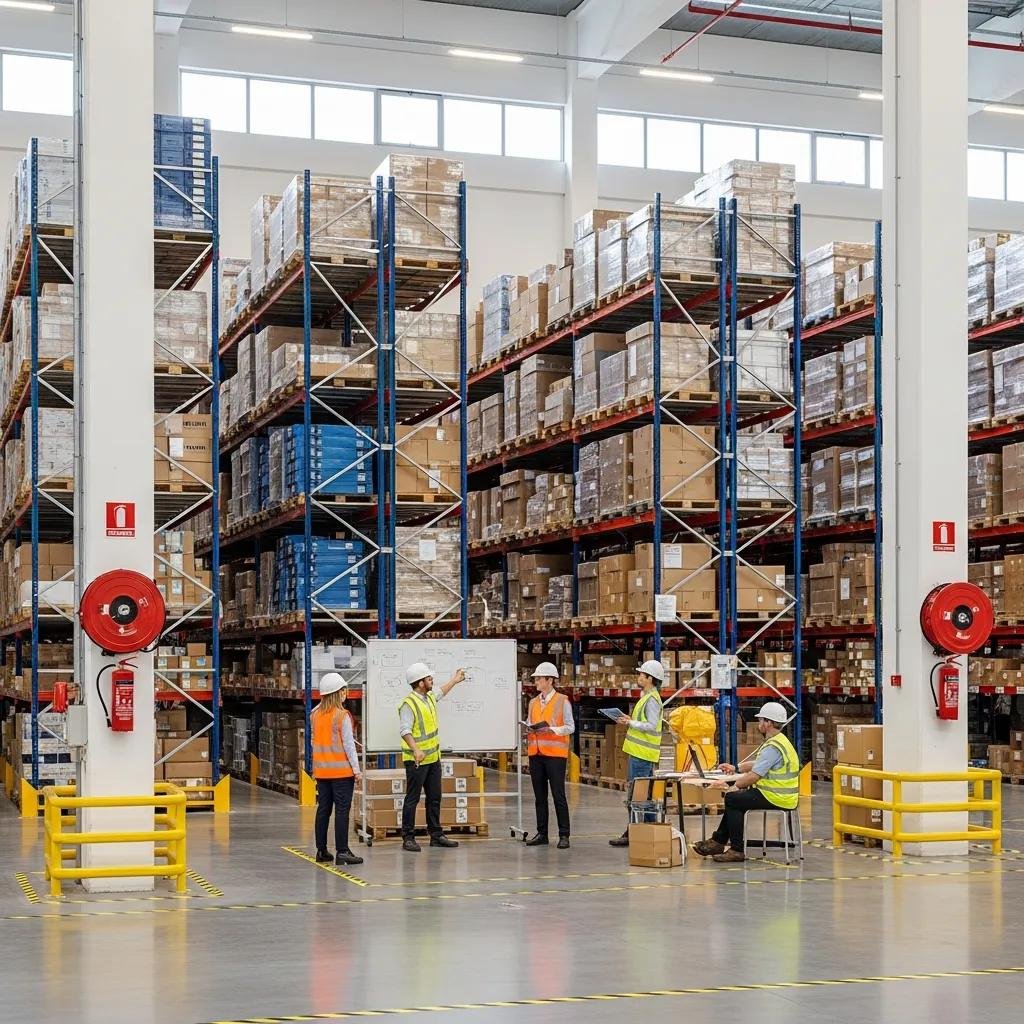
Authorities use the International Building Code (IBC), International Fire Code (IFC Chapter 32), and NFPA 13 standards to review warehouse racking designs.
- Ensure sprinkler coverage between rack flues
- Enforce fire-safe materials and egress pathways
- Regulate storage height and commodity classification
What Defines High-Piled Storage Under Texas Fire Codes?
- Over 12 ft for general goods
- Over 6 ft for high-hazard materials
- Over 500 ft² per storage pile
How Does IFC Chapter 32 Apply?
IFC Chapter 32 regulates high-piled storage by requiring permits, fire marshal approvals, and detailed documentation of commodity types and storage layouts.
What Fire Suppression Requirements Must Be Met?
High-piled storage requires NFPA 13-compliant sprinkler systems.
| Standard | Flow Rate | Clearance |
|---|---|---|
| Light Hazard | 0.10 gpm/ft² | 18 in |
| Ordinary Hazard I | 0.15 gpm/ft² | 24 in |
| Ordinary Hazard II | 0.30 gpm/ft² | 36 in |
How Do You Obtain a Warehouse Racking Permit in Texas?
Permit approval involves engineering drawings, fire compliance documentation, and local authority review. Requirements vary by city (Dallas, Houston, Austin), which may include separate fire and structural submissions.
What Are Ongoing Compliance Requirements?
- Regular structural inspections
- Annual fire system testing
- Updated documentation for modifications
What Are Key Compliance Factors?
Fire Code Compliance
Proper flue spacing and sprinkler placement prevent fire spread and ensure system effectiveness.
Structural Requirements
- Anchored rack uprights
- Cross-bracing for stability
- Manufacturer-approved connectors
OSHA Requirements
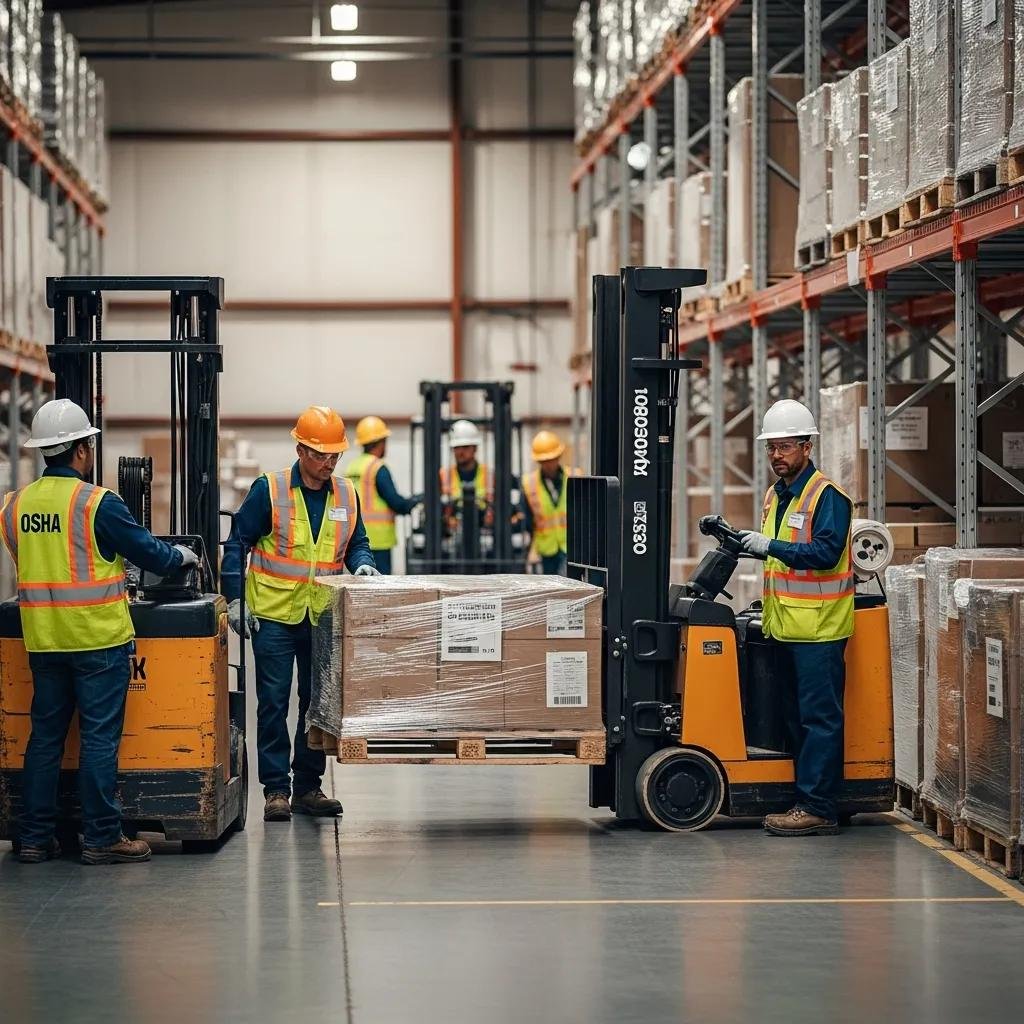
OSHA requires labeled load capacities and trained forklift operators for safe warehouse operations.
Why Load Labeling Matters
Clear load plaques prevent overloading and structural failure risks.
Common Challenges in Permitting
Delays often occur due to incomplete documentation or incorrect engineering details. Working with permit consultants helps ensure compliance and faster approvals.
Conclusion
Warehouse racking permits in Texas ensure safety, compliance, and operational efficiency. Proper planning and expert guidance help avoid delays and reduce risk while maintaining regulatory compliance.
Contact Quantum Warehouse Solutions for professional racking permit consultation and compliance support.