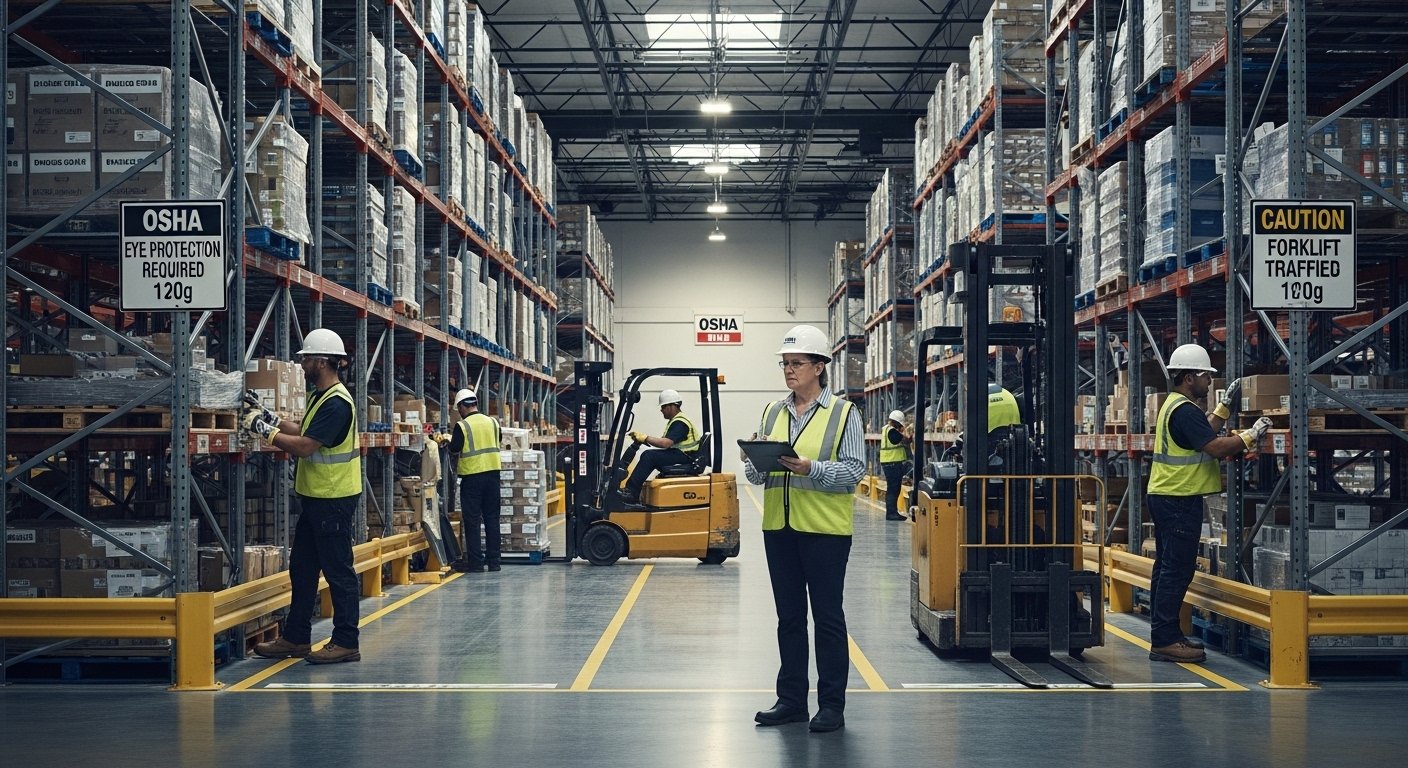
OSHA rules are essential to keep your warehouse safe. This guide explains the key OSHA standards, practical compliance checklists, forklift rules and emergency procedures to help managers implement safety measures and avoid fines.

Understanding regulations alone won’t make a workplace safe — you must implement them effectively.

Translating OSHA Policy to Practical Warehouse Safety

Examines compliance and practical hazard prevention in US warehousing, showing that merely citing OSHA often fails to improve day-to-day safety.

From Policy to Practice: Why Citing Regulations Won’t Keep Your Warehouse Safe, 2025

What Are the Key OSHA Warehouse Safety Standards?

OSHA enforces equipment safety, employee training and hazard communication to reduce accidents and legal risk.

Warehouses are often inspected because of the inherent risks involved.

OSHA Inspections and Compliance in Warehousing

Warehousing and storage rank high on OSHA’s inspection list; between October 2008 and September 2009 OSHA issued 626 related actions.

Warehousing & storage safety, 2008

Which OSHA Regulations Apply to Warehouse Operations?

Key regulations that apply include the General Duty Clause, Hazard Communication Standard, forklift rules and PPE requirements.

  1. General Duty Clause : Employers must provide a workplace free from recognized hazards.
  2. Hazard Communication Standard (HCS) : Requires proper labeling and accessible safety data sheets for hazardous materials.
  3. Forklift Safety Regulations : Mandates training and certification for forklift operators.
  4. Personal Protective Equipment (PPE) Standards : Employers must provide appropriate PPE and training.

Knowing these core rules helps you stay compliant and protect your workforce.

What Safety Equipment and PPE Are Required in Warehouses?

Display of essential warehouse safety equipment including hard hats, safety glasses, and steel-toed boots

PPE and safety equipment reduce risk. Common items include:

  • Hard Hats : Protect against head injuries from falling objects.
  • Safety Glasses : Shield eyes from debris and hazardous materials.
  • Steel-Toed Boots : Prevent foot injuries from heavy items.
  • High-Visibility Vests : Keep workers visible in busy areas.

Train staff on correct use and upkeep of PPE to ensure protection.

How to Use an OSHA Compliance Checklist for Warehouses?

Use a regular compliance checklist to spot hazards, close gaps and keep your facility up to standard.

What Items Should Be Included in a Warehouse Safety Compliance Checklist?

A concise checklist should cover critical controls and readiness items such as:

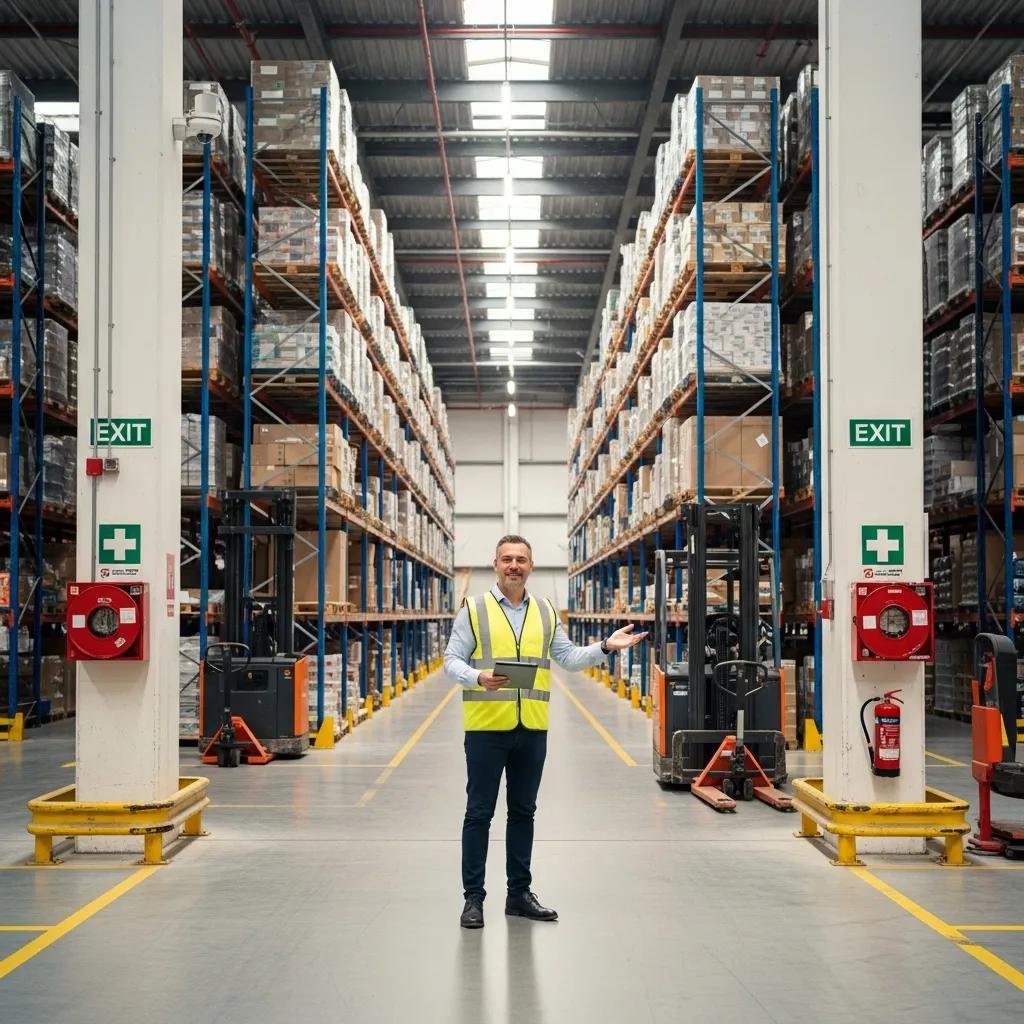
  1. Emergency Exits : Ensure exits are clearly marked and accessible.
  2. Fire Extinguishers : Verify extinguishers are present and inspected.
  3. First Aid Kits : Keep kits stocked and accessible.
  4. Forklift Inspections : Inspect forklifts and material handling equipment regularly.

Keeping the checklist current supports ongoing OSHA compliance.

How to Conduct Effective Risk Assessments and Safety Audits?

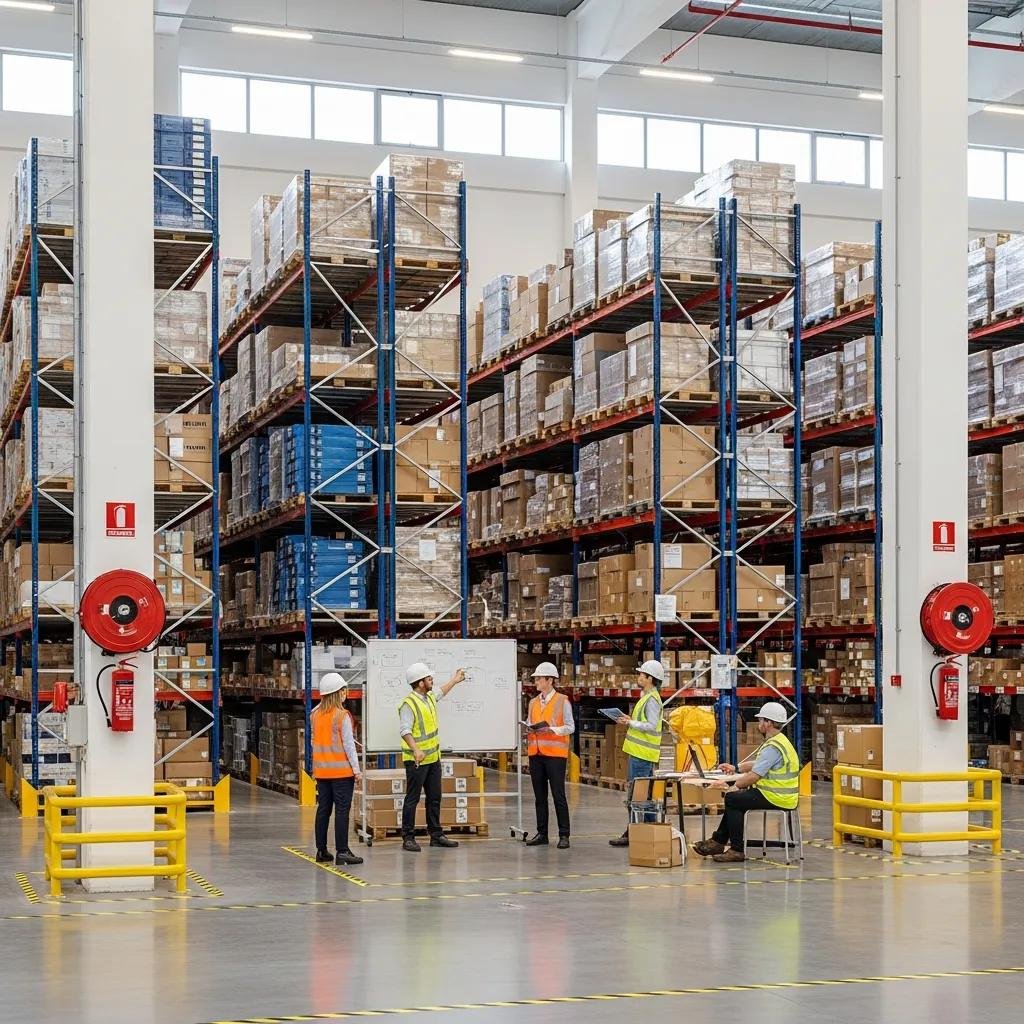
Risk assessments and audits reveal hazards; use a simple, repeatable process to manage them.

  1. Identify Hazards : Walk the facility to spot risks.
  2. Evaluate Risks : Judge likelihood and severity.
  3. Implement Controls : Apply training, procedures or equipment changes.
  4. Document Findings : Record assessments and corrective actions.

Regular audits keep you compliant and improve safety over time.

What Are the Essential Forklift Safety Regulations in Warehouses?

Forklifts are common in warehouses; following OSHA forklift rules protects operators and nearby workers.

What OSHA Forklift Training and Certification Requirements Must Be Met?

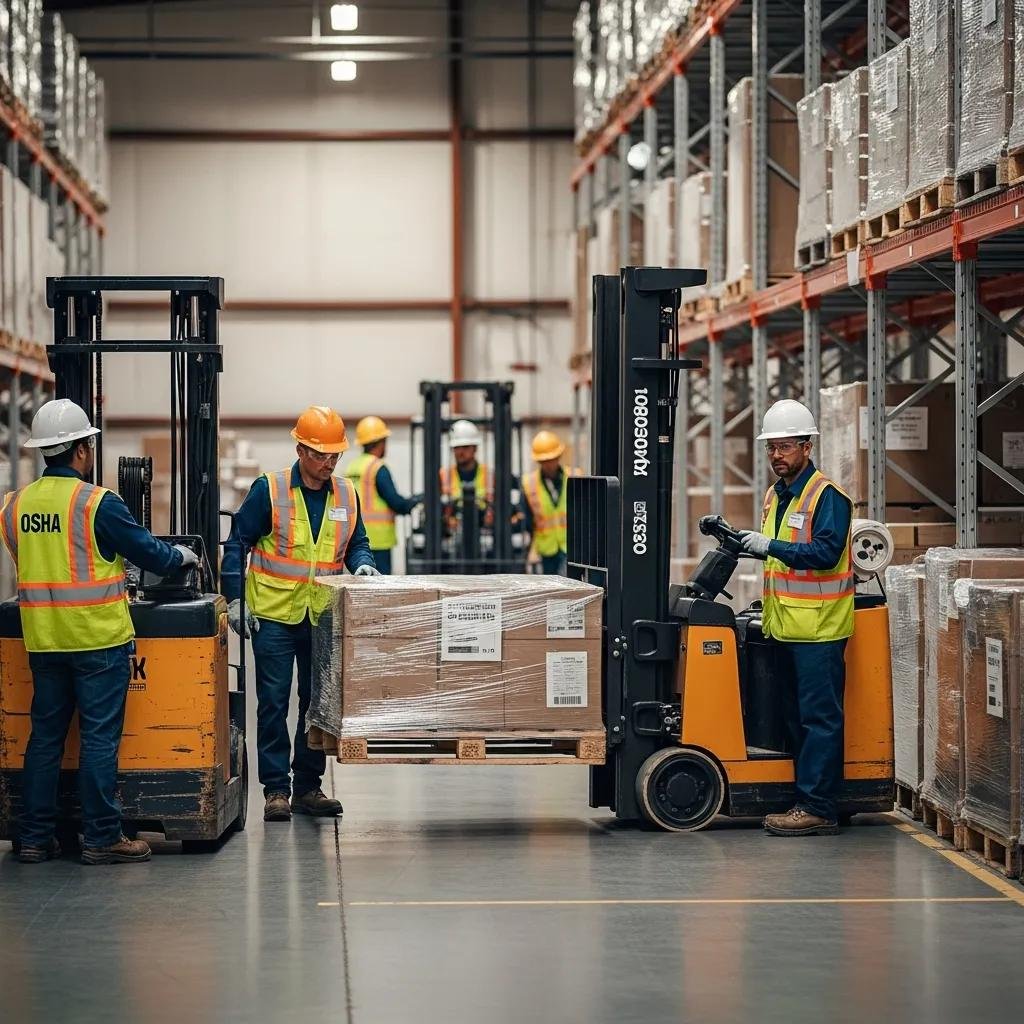
Forklift operator receiving training on safe operation techniques in a warehouse environment

OSHA requires forklift operators to receive training and certification. Key requirements include:

  1. Training Program : Operators must complete training on safe operation, maintenance and hazard recognition.
  2. Evaluation : Evaluate operators before certification.
  3. Retraining : Retrain after incidents or if performance is unsatisfactory.

Proper training and evaluation reduce accident risk.

OSHA spells out these training requirements to prevent injuries and ensure compliance.

OSHA Forklift Operator Training & Safety Requirements

Summarises OSHA’s requirements for forklift training and notes controls used during maintenance, such as wheel chocks or similarly effective methods.

Regulating forklift safety: Strategies to prevent injury and improve compliance, 2016

How to Implement Safe Material Handling Practices?

Safe handling lowers injury risk. Key practices include:

  1. Proper Lifting Techniques : Train employees to lift safely to avoid back injuries.
  2. Use of Equipment : Use forklifts and pallet jacks for heavy loads.
  3. Clear Pathways : Keep aisles free of obstructions.

These simple steps support a safer workplace.

How to Prepare for Warehouse Emergency Procedures and Hazard Communication?

Preparing for emergencies and communicating hazards clearly are central to safety; procedures help staff respond quickly.

What Are OSHA Requirements for Warehouse Emergency and Fire Safety?

OSHA requires emergency procedures and fire safety measures, including:

  1. Emergency Action Plans : Develop and share evacuation and emergency plans.
  2. Fire Safety Training : Train staff on fire protocols and extinguisher use.
  3. Regular Drills : Run drills so employees know procedures.

These actions enable a faster, safer response in emergencies.

How to Manage Hazard Communication and Chemical Safety in Warehouses?

Clear hazard communication is vital for chemical safety; follow established guidance to manage risks.

  1. Labeling : Ensure hazardous materials are clearly labeled.
  2. Safety Data Sheets (SDS) : Keep SDS accessible for all chemicals.
  3. Employee Training : Train staff on hazard recognition and safe handling.

These practices reduce chemical exposure and accidents.

To further enhance operations, consider warehouse solutions that streamline processes and improve efficiency. For layout and workflow optimization, Quantum Warehouse Solutions offers tailored services. For consulting that targets cost reduction and efficiency, Quantum Warehouse Solutions provides advisory support.

Frequently Asked Questions

What are the consequences of non-compliance with OSHA regulations in warehouses?

Non-compliance can lead to fines, legal liability and greater regulatory scrutiny, and it increases accident and compensation risk.

How often should safety training be conducted for warehouse employees?

Provide initial training before work starts and annual refreshers; retrain after incidents or when procedures change.

What role do supervisors play in maintaining OSHA compliance in warehouses?

Supervisors enforce protocols, perform inspections, ensure training and encourage hazard reporting.

How can technology improve safety compliance in warehouse operations?

Technology automates monitoring and reporting, speeds issue detection and enables better training delivery.

What should be included in an emergency action plan for warehouses?

Include evacuation routes, assigned roles, reporting steps, extinguisher procedures and a drill schedule; review regularly.

How can warehouses ensure proper hazard communication regarding chemicals?

Keep labels clear, maintain accessible SDS, train staff and audit the hazard program regularly.

Conclusion

Applying OSHA requirements keeps your warehouse safer and helps avoid penalties. Regular training, clear communication and routine audits sustain compliance and build a stronger safety culture.