
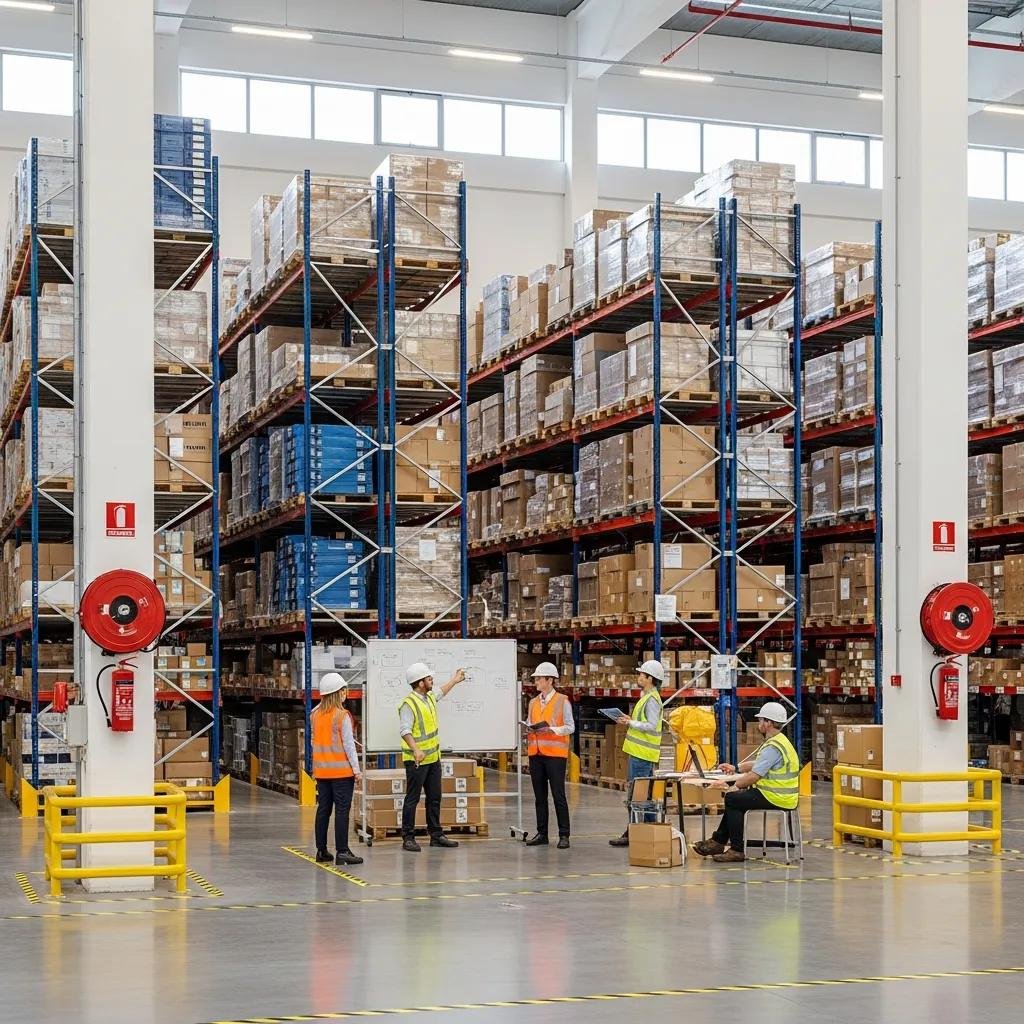
You can get inspection-ready in 24 hours. This guide outlines the essential steps—safety must-haves, a concise checklist, common compliance failures, and how expert consultants speed readiness. Use it to cut last-minute stress and pass inspection.

What Are the Key Warehouse Safety Requirements to Meet Before Inspection?

Before an inspection, ensure core safety elements are current: maintained equipment, trained employees, and organized documentation. These actions reduce penalties and improve workplace safety.

  1. Safety Equipment Maintenance: Inspect and service items like fire extinguishers and first aid kits so they function as required.
  2. Employee Training: Verify staff are trained in safety protocols and emergency procedures.
  3. Documentation Readiness: Keep compliance paperwork accessible and up to date for a smooth review.

Quantum Warehouse Solutions can help implement these requirements quickly.

Which OSHA Standards Apply to Warehouse Inspections?

Key OSHA standards for warehouses include the General Duty Clause, Hazard Communication, and forklift safety rules.

  • General Duty Clause: Requires a workplace free from recognized hazards.
  • Hazard Communication Standard: Requires labeling and safety data sheets for hazardous materials.
  • Forklift Safety Regulations: Covers safe operation of forklifts and powered industrial trucks.

Meeting these standards helps protect staff and improves inspection outcomes.

How to Quickly Identify and Address Safety Hazards

Warehouse manager inspecting safety protocols and identifying hazards during an audit

Spot and fix hazards fast with a focused, systematic approach.

Recognizing risks in a busy warehouse makes a thorough, accurate risk assessment essential.

Comprehensive Risk Assessment for Warehouse Safety

In-store warehouses can be hazardous: they hold large volumes of varied everyday goods and have rapid turnover. Safety risk is multi‑criteria; assessing such dynamic places requires an accurate, simple method to use.

Optimizing in-store warehouse safety: A DEMATEL approach to comprehensive risk assessment, SV Esmaeili, 2025
  1. Scope Definition: Define the areas and operations to assess.
  2. Hazard Identification Techniques: Use audits, employee feedback, and observation to find hazards.
  3. Control Implementation: Apply controls such as training and equipment upgrades to reduce risk.

Proactive hazard control improves safety and inspection readiness.

What Is the Step-by-Step Warehouse Inspection Checklist for Rapid Audit Preparation?

A concise checklist keeps preparation efficient and prevents oversights.

  1. Gather Documentation: Compile safety protocols, training records, and site plans.
  2. Conduct Internal Audits: Run a targeted internal audit to find compliance gaps.
  3. Train Staff: Confirm staff know inspection roles and procedures.

How to Conduct a Last-Minute Safety Audit Efficiently

With little time, focus on high-impact checks and clear actions.

  1. Gather Documentation: Quickly assemble required records.
  2. Define Scope: Prioritize high-risk zones likely to be inspected.
  3. Conduct a Walk-Through: Do a focused walk-through to spot visible issues.

These steps support an effective audit under tight deadlines.

Which Compliance Documentation Must Be Ready for Review?

Organized compliance documentation folder with safety protocols and training records for warehouse inspection

Essential documents include site plans, written safety protocols, and training records—organized and easy to access.

  • Detailed Site Plans: Layouts showing exits and equipment locations.
  • Safety Protocols: Procedures for hazardous materials and emergencies.
  • Operational Details: Training logs and drill records.

Keep documents indexed and quickly retrievable for the inspector.

What Are the Most Common Warehouse Compliance Failures and How to Fix Them Fast?

Common failures are often straightforward to correct if caught early.

  1. Overloading Racks: Enforce weight limits and redistribute loads.
  2. Lack of Fire Safety Measures: Ensure extinguishers, alarms, and clear procedures are in place.
  3. Inadequate Employee Training: Schedule refresher training and document completion.

Which Safety Protocols Are Frequently Overlooked?

Common gaps that cause inspection failures include:

  • Forklift Certification: Verify operator certifications are current.
  • Proper PPE Usage: Enforce PPE rules in designated zones.
  • Emergency Exit Access: Keep exits clear and marked at all times.

Addressing these gaps quickly strengthens compliance.

How to Correct Documentation and Record-Keeping Gaps Quickly

Use practical measures to fix record issues.

  1. Conduct Regular Audits: Schedule brief, frequent checks to find missing records.
  2. Utilize Checklists: Standardize document capture with simple checklists.
  3. Engage Experts: Bring in compliance specialists to review and streamline processes.

These remedies improve accuracy and meet inspectors’ expectations.

How Can Expert Consulting Support Expedite Your Warehouse Inspection Readiness?

Consultants speed readiness by diagnosing gaps and implementing fixes.

  1. Permit Application Assistance: Help navigate permit requirements and filings.
  2. Compliance Audits: Provide targeted audits to identify issues before inspectors arrive.
  3. Installation Services: Install or verify safety equipment to meet standards.

What Services Does Quantum Warehouse Solutions Provide for 24-Hour Preparation?

Quantum Warehouse Solutions offers rapid services to prepare sites on short notice.

  • Permit Application Assistance: Support with permit workflows.
  • Compliance Audits: Fast audits to locate and fix issues.
  • Installation Services: Install or certify required safety systems.

How to Access Rapid Inspection Preparation Support and Resources

Get rapid support in three steps:

  1. Visit the Website: Review services from Quantum Warehouse Solutions.
  2. Request a Quote: Ask for a tailored estimate.
  3. Contact for Inquiries: Reach the team for questions or urgent help.

These resources help ensure your warehouse is inspection-ready.

Frequently Asked Questions

What should I do if I discover safety hazards just before the inspection?

Fix the highest-risk items first: remove obstacles, secure loose items, or add temporary safeguards. Record corrective actions and notify your team to show inspectors you acted promptly.

How can I ensure my employees are prepared for the inspection?

Hold a brief pre-inspection meeting, run through roles and a short checklist (PPE, exits, emergency steps), and consider a quick mock inspection to clarify duties.

What are the consequences of failing a warehouse inspection?

Failing may lead to fines, legal penalties, and increased oversight; it also increases safety risk and can harm morale and reputation. Address issues before they escalate.

How often should I conduct internal audits for compliance?

Quarterly audits are a minimum; increase frequency for larger operations or after incidents to catch gaps early.

What role does employee training play in warehouse safety compliance?

Training ensures staff follow protocols, know emergency steps, and use equipment correctly. Regular sessions reduce accidents and improve inspection results.

Can I use technology to assist in preparing for a warehouse inspection?

Yes. Use software to manage documents, track training, and schedule audits. Mobile apps speed hazard reporting and checklist completion.

Conclusion

You can prepare for an inspection on a tight timeline with a focused plan. Prioritize safety checks, organized documentation, and expert help to achieve a successful outcome. These steps increase workplace safety and show commitment to standards—contact Quantum Warehouse Solutions for rapid support.