Table of Contents
ToggleWarehouse Commodity Classification: Critical Sprinkler Design CriteriaCommodity Classification for Sprinkler Design: Essential Fire Protection Criteria for Warehouses
Commodity classification determines the fire hazard posed by stored materials and drives sprinkler system design. Accurate classification guides water density, spacing, and protection choices so systems meet codes and control fires. This article explains why classification matters, how high pile storage changes requirements, which standards apply, and how expert advice improves design and compliance.
What is Commodity Classification and Why Does It Matter for Sprinkler System Design?
Commodity classification groups materials by combustibility and heat release to set sprinkler design criteria. The class determines water demand, spacing, and protection strategy so systems can suppress likely fire scenarios. Correct classification ensures protection levels match regulatory requirements and actual warehouse risks.
Warehouse Commodity Classification for Sprinkler Design
Purpose: Present a commodity classification method for rack-type warehouses to guide sprinkler system design. Method: On-site surveys and analysis of NFPA, FMDS, EN, and Japanese criteria were performed. Result: Classification into extra high, high, medium, and low hazard based on heat of combustion. Conclusion: Apply sprinkler design criteria to ensure maximum extinguishing effectiveness.
A Commodity Classification Method of Domestic Rack-Type Warehouse for Sprinkler System Design, 2019
How Are NFPA Commodity Classes Defined and Applied?
The National Fire Protection Association (NFPA) classifies commodities by combustibility and heat release into Classes I–IV. Each class has specific sprinkler density and layout requirements. Higher classes require greater water density and stronger suppression systems.
Commodity Classification Impact on Sprinkler System Adequacy
A higher-class commodity will severely overtax a sprinkler system designed for a lower-class product. To comply with NFPA 13, the commodity classification must be correctly identified first.
Identifying Sprinkler System Inadequacy at Your Facility, 2017
What Role Does Hazard Level Play in Sprinkler Requirements?
Hazard level determines required water supply and system strength. Higher hazards such as flammable liquids or high pile storage require increased water density and stronger system design to ensure effective fire control.
How Does High Pile Storage Influence Fire Sprinkler Density Requirements?
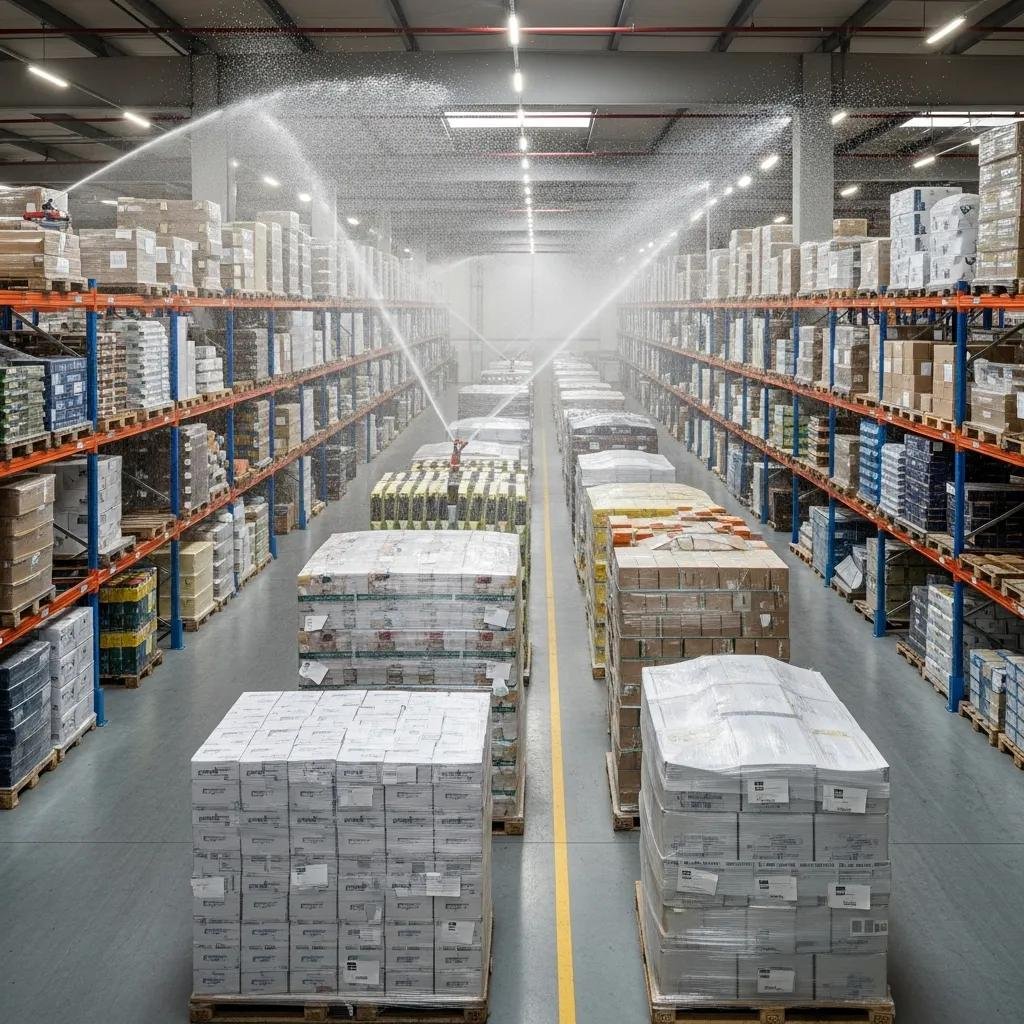
High pile storage increases fuel load and accelerates fire spread. Sprinkler systems must be designed with higher density, improved coverage, and reliable discharge patterns to manage elevated fire risks.
Sprinkler Systems for High-Density Warehouse Storage
High-density storage and automated systems (ASRS) increase fire hazards without properly engineered sprinkler protection.
A Study on Automatic Sprinkler Systems in AS/RS Warehouses, 2018
What Are the Fire Risks Associated with High Pile Storage?
High pile storage increases fire intensity, heat release, and spread speed. Deep storage layouts can create hidden fire zones that are difficult to suppress, requiring enhanced sprinkler coverage.
Which Warehouse Fire Protection Standards Govern Sprinkler Design?
Fire protection standards define sprinkler system design, installation, and maintenance requirements to ensure safe and reliable performance during fire events.
What Are the Key Warehouse Fire Code Compliance Requirements?
NFPA 13 sets minimum requirements for sprinkler system design, including water supply, spacing, and hazard classification to ensure effective fire suppression.
How Does NFPA 13 Guide Sprinkler System Design Based on Commodity Classification?
NFPA 13 links commodity classification to sprinkler density, spacing, and system design requirements to ensure adequate fire protection based on hazard level.
How Can Expert Consultation Improve Sprinkler Design and Compliance?
Expert consultants help align sprinkler systems with fire codes, validate commodity classification, and ensure compliance with regulatory standards.
What Services Does Quantum Warehouse Solutions Provide for Fire Protection?
Quantum Warehouse Solutions provides risk assessments, sprinkler design consultation, and compliance audits for warehouse fire protection systems.
Frequently Asked Questions
What factors influence sprinkler system choice for different commodity classes?
Factors include combustibility, heat release, storage height, and fire load. Higher hazard classes require stronger sprinkler systems with higher water density.
How often should sprinkler systems be inspected?
NFPA recommends annual inspections, with more frequent checks in high-risk environments.
What happens if commodities are misclassified?
Misclassification can result in inadequate fire protection, increased fire risk, property damage, and regulatory penalties.
How can technology improve fire protection systems?
Smart sensors, automated sprinklers, and analytics improve detection speed, response time, and system efficiency.
Conclusion
Commodity classification is essential for proper sprinkler system design and fire safety compliance. Accurate classification ensures systems are designed to handle real fire risks effectively. Working with experts improves compliance, safety, and system performance.