Table of Contents
ToggleOSHA Requirements for Warehouse Operations: A Plain-English Guide
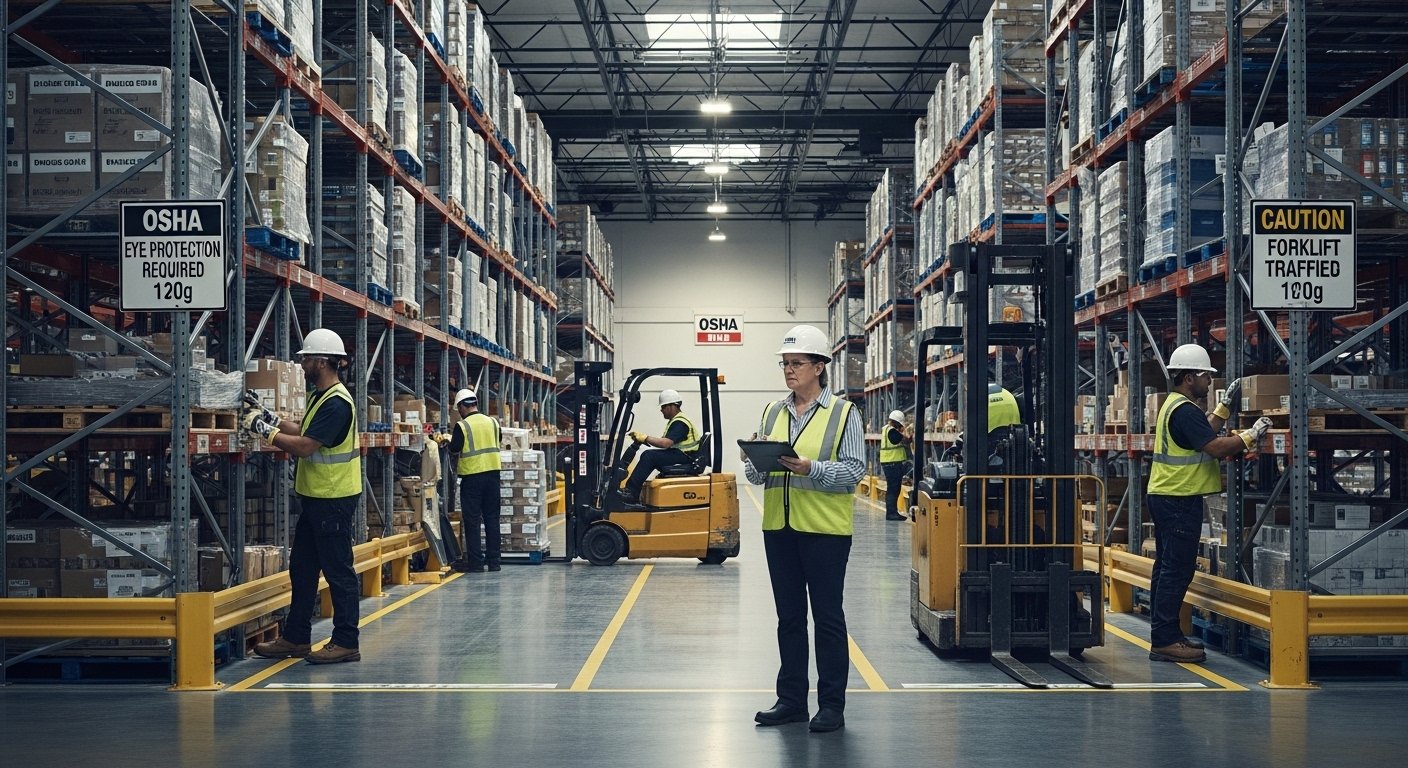
OSHA rules are essential to keep your warehouse safe. This guide explains the key OSHA standards, practical compliance checklists, forklift rules and emergency procedures to help managers implement safety measures and avoid fines.
Understanding regulations alone won’t make a workplace safe — you must implement them effectively.
Translating OSHA Policy to Practical Warehouse Safety
Examines compliance and practical hazard prevention in US warehousing, showing that merely citing OSHA often fails to improve day-to-day safety.
From Policy to Practice: Why Citing Regulations Won’t Keep Your Warehouse Safe, 2025
What Are the Key OSHA Warehouse Safety Standards?
OSHA enforces equipment safety, employee training and hazard communication to reduce accidents and legal risk.
Warehouses are often inspected because of the inherent risks involved.
OSHA Inspections and Compliance in Warehousing
Warehousing and storage rank high on OSHA’s inspection list; between October 2008 and September 2009 OSHA issued 626 related actions.
Warehousing & storage safety, 2008
Which OSHA Regulations Apply to Warehouse Operations?
- General Duty Clause: Employers must provide a workplace free from recognized hazards.
- Hazard Communication Standard (HCS): Requires proper labeling and accessible safety data sheets.
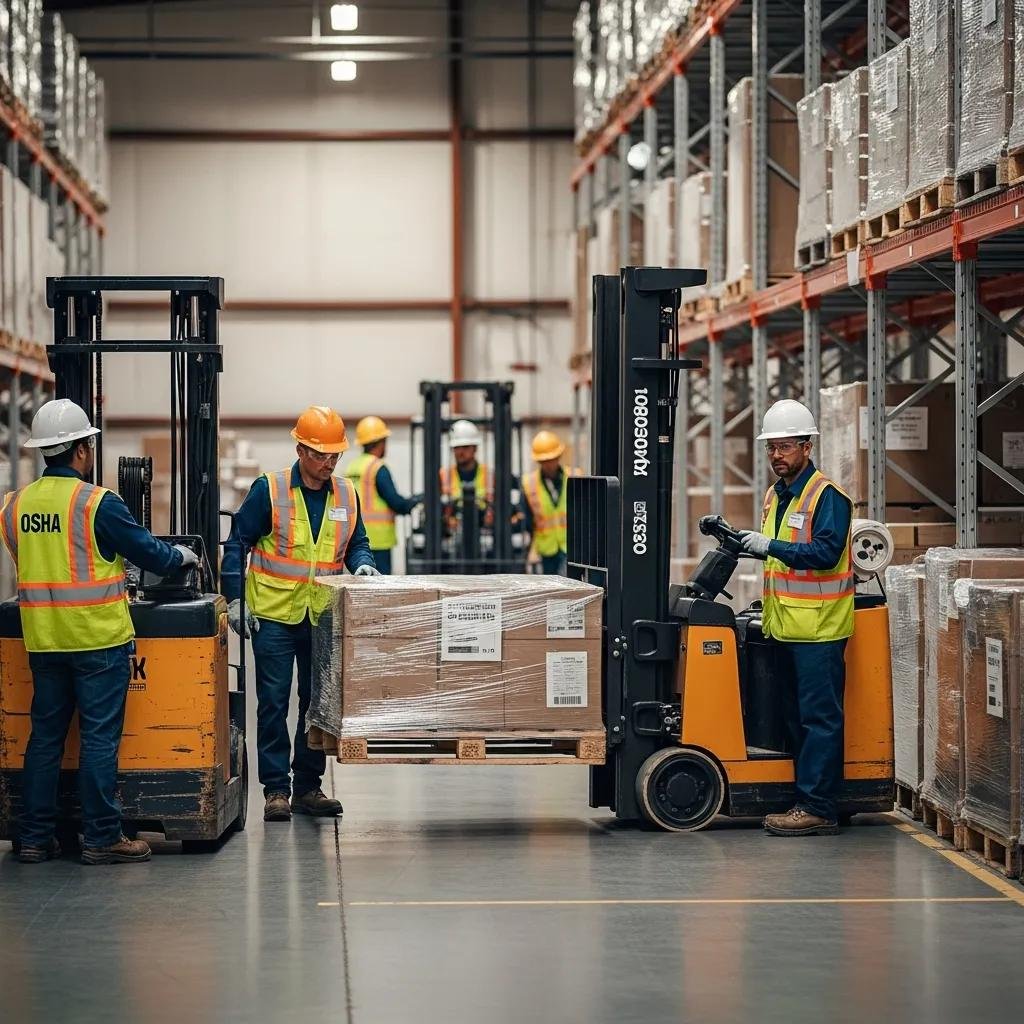
- Forklift Safety Regulations: Mandates training and certification for operators.
- Personal Protective Equipment (PPE) Standards: Employers must provide PPE and training.
What Safety Equipment and PPE Are Required in Warehouses?
PPE reduces workplace risk. Common items include:
- Hard hats: Protect against falling objects.
- Safety glasses: Shield eyes from debris.
- Steel-toed boots: Prevent foot injuries.
- High-visibility vests: Improve worker visibility.
How to Use an OSHA Compliance Checklist for Warehouses?
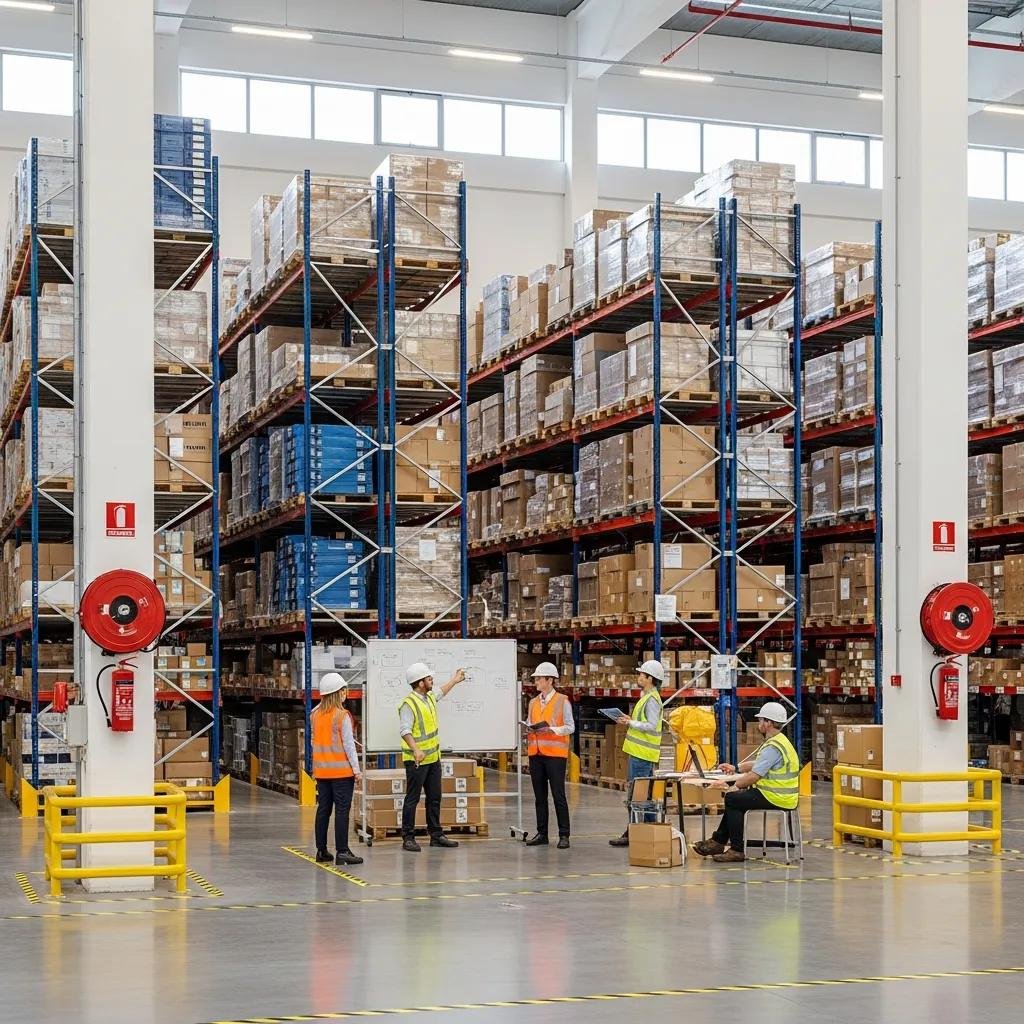
- Emergency exits: Clearly marked and accessible.
- Fire extinguishers: Present and inspected.
- First aid kits: Stocked and accessible.
- Forklift inspections: Conducted regularly.
What Are Essential Forklift Safety Regulations?
- Training program: Operators must complete safety training.
- Evaluation: Operators must be assessed before certification.
- Retraining: Required after incidents or unsafe performance.
Emergency Procedures and Hazard Communication
- Emergency action plans: Document evacuation procedures.
- Fire safety training: Train employees on extinguisher use.
- Regular drills: Ensure preparedness.
- Labeling: Clearly mark hazardous materials.
- Safety Data Sheets (SDS): Keep accessible.
- Training: Teach safe chemical handling.
Key Steps to Sustain OSHA Warehouse ComplianceConclusion
Applying OSHA requirements keeps your warehouse safer and helps avoid penalties. Regular training, clear communication and routine audits sustain compliance and build a stronger safety culture.