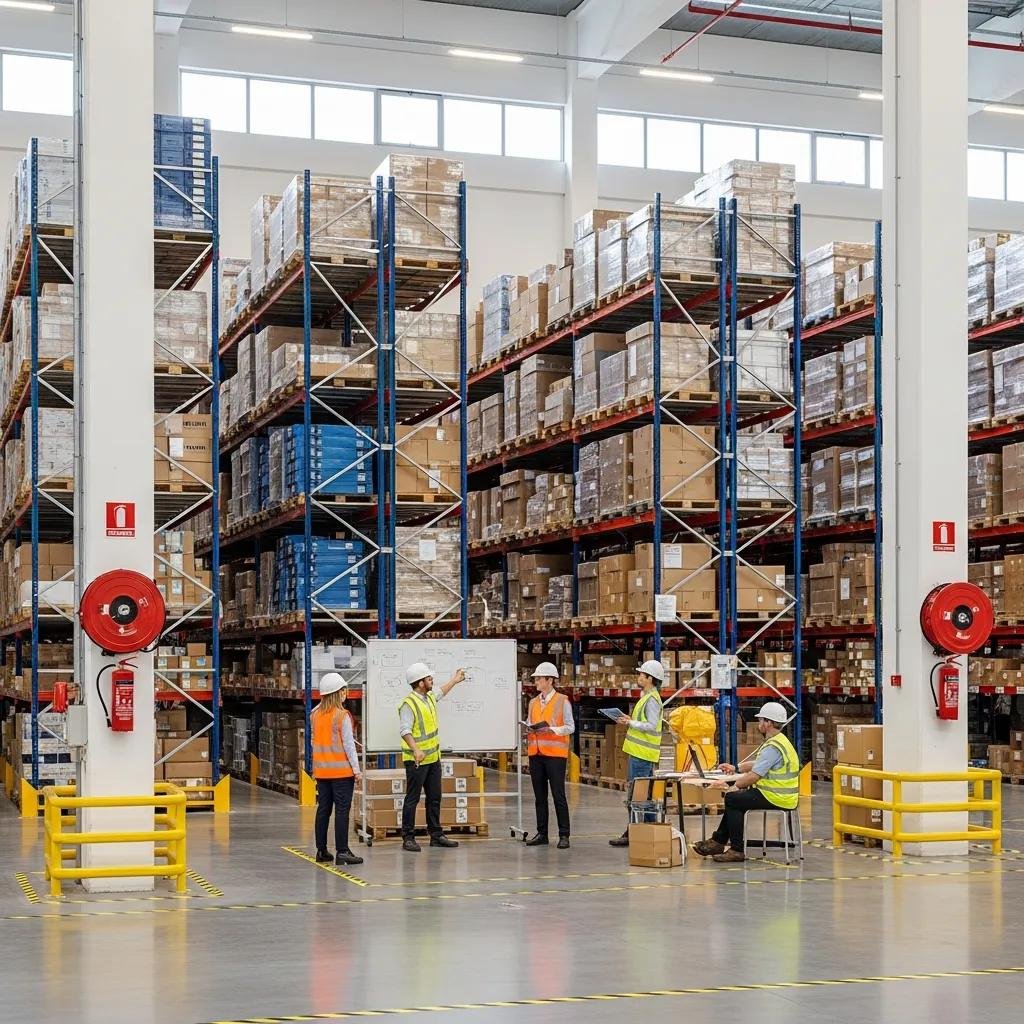

A warehouse audit verifies safety compliance and operational efficiency. A clear checklist helps you spot issues and speeds inspections. This article outlines essential checklist items—safety inspections, inventory procedures, and regulatory requirements—so managers can prepare and keep the workplace safe. We also cover inspection best practices and how Quantum Warehouse Solutions can support the process.
Table of Contents
ToggleWhat Are the Essential Components of a Warehouse Audit Checklist?
A complete audit checklist should include documentation review, health and safety protocols, and employee training. Reviewing these areas methodically reveals compliance gaps and operational weaknesses.
Which Safety Inspection Items Should Be Included?
Safety checks keep employees protected. Include the following items:
- Personal Protective Equipment (PPE) Review: Ensure that all employees have access to and are using appropriate PPE, such as helmets, gloves, and safety shoes.
- Fire Safety Systems Inspection: Regularly check fire alarms, extinguishers, and sprinkler systems to ensure they are functional and compliant with NFPA standards.
- Emergency Preparedness: Evaluate emergency exit routes and ensure that all employees are trained in emergency procedures.
These measures protect staff and support OSHA compliance.
How to Verify Inventory Audit Procedures Effectively?
Accurate inventory control prevents stock loss and keeps operations running smoothly. Use these methods:
- Regular Internal Audits: Schedule periodic audits to assess inventory accuracy and identify discrepancies.
- Standardized Audit Templates: Use templates to ensure consistency in the audit process and simplify comparisons over time.
- Training Staff: Train staff on inventory management practices to improve accuracy and accountability.
Applying these practices improves inventory accuracy and operational efficiency.
Research shows advanced systems reduce risks tied to manual inventory processes, especially in complex bonded warehouses.
Warehouse Inventory & Regulatory Compliance
In bonded warehouses, manual inventory procedures pose serious risks to both operational effectiveness and regulatory compliance. This study highlights the importance of web-based inventory systems in reducing risk and improving accuracy.
Compliance-by-Design for Bonded Warehouses: A Web-Based Inventory System with CEISA-Verified Gate Control and D&M Success Evaluation, F Alzami, 2026
How Do Warehouse Regulatory Compliance Requirements Impact Audits?
Regulatory requirements shape audit scope and priorities. They improve safety, boost efficiency, and reduce legal risk. Understanding compliance implications helps managers prepare more effectively.
What Are the Key Compliance Standards to Review?
Key standards to review include:
- OSHA Regulations: Ensure that safety protocols meet Occupational Safety and Health Administration standards to protect employee health.
- NFPA Standards: Review National Fire Protection Association codes to confirm fire safety measures are in place.
- Documentation and Record Keeping: Maintain accurate records of safety inspections, employee training, and compliance measures.
These standards keep your warehouse safe and compliant.
How to Address Common Warehouse Compliance Issues?
Fixing common compliance issues requires proactive steps, such as:
- Regular Training: Conduct ongoing training sessions to keep employees informed about compliance requirements and safety protocols.
- Conducting Regular Audits: Implement a schedule for audits to identify and resolve compliance issues promptly.
- Maintaining Proper Documentation: Keep compliance-related documentation up-to-date and easily accessible for audits.
These steps reduce compliance risk and improve overall safety.
What Are Best Practices for Preparing a Warehouse for Inspection?
Preparing for inspection means organizing documentation, meeting compliance standards, and running regular reviews so the facility remains ready.
How to Conduct a Logistics Facility Audit Step-by-Step?
A logistics facility audit follows these critical steps:
- Preparation: Gather necessary documentation and ensure that safety equipment is in place.
- Scope Definition: Define the audit scope, including areas to be inspected and the compliance standards to review.
- Follow-Up Monitoring: After the audit, implement a follow-up plan to address identified issues and ensure ongoing compliance.
This structure helps keep operations compliant and efficient.
What Are Effective Risk Assessment Strategies in Warehouses?
Good risk assessment pinpoints hazards before they cause incidents. Use these strategies:
- Regular Internal Audits: Conduct frequent audits to identify and mitigate risks before they lead to incidents.
- Hazard Identification: Implement a systematic approach to identify potential hazards in the workplace.
- Employee Training: Ensure employees are trained in risk assessment procedures and understand their roles in maintaining safety.
These strategies make the workplace safer and operations more reliable.
High volumes and fast turnover in warehouses make robust risk assessment methods essential for safety.
Warehouse Safety Risk Assessment Methods
In-store warehouses can be high-risk environments due to the storage of diverse goods and rapid inventory turnover. Accurate and simple risk assessment methods are essential for maintaining safety in such dynamic settings.
Optimizing in-store warehouse safety: A DEMATEL approach to comprehensive risk assessment, SV Esmaeili, 2025
How Can Quantum Warehouse Solutions Assist with Warehouse Audit Preparation?
Quantum Warehouse Solutions provides comprehensive audit and compliance services focused on operational efficiency and regulatory adherence. Their expertise strengthens audit preparation.
What Customized Consultation Services Are Available?
Quantum Warehouse Solutions offers customized consultation services, including:
- Personalized Consultations: Tailored consultations to address specific warehouse needs and compliance challenges.
- Compliance Assessments: In-depth assessments to evaluate current compliance status and identify areas for improvement.
- Ongoing Support: Continuous support to help warehouses maintain compliance and operational efficiency.
These services help warehouses navigate compliance demands and boost performance.
How Do Professional Warehouse Audits Improve Compliance?
Professional warehouse audits deliver clear benefits, including:
- Improved Safety: Regular audits help identify safety hazards and ensure compliance with regulations.
- Reduced Liability Risks: Maintaining compliance minimizes the risk of legal issues and associated costs.
- Cost Savings: Efficient operations and compliance can lead to meaningful cost savings over time.
Working with professional auditors improves compliance and efficiency and benefits the bottom line.
Frequently Asked Questions
What is the importance of employee training in warehouse audits?
Training ensures staff understand safety protocols, compliance rules, and operational steps. Well-trained teams follow standards more consistently, which lowers accidents and violations.
How often should warehouse audits be conducted?
Many organizations run audits quarterly or biannually depending on operational complexity. Regular audits help catch issues early.
What are the consequences of non-compliance in warehouse operations?
Non-compliance can lead to legal penalties, higher liability, fines, and reputational damage.
How can technology improve warehouse audit processes?
Technology automates data collection, increases accuracy, and speeds reporting. Tools like barcode scanners and audit software improve efficiency.
What role does documentation play in warehouse audits?
Documentation proves compliance, highlights improvement areas, and supports accountability.
What should be included in a warehouse audit report?
A report should include compliance status, identified issues, corrective actions, and timelines.
How can warehouses prepare for unexpected inspections?
Maintain organized documentation, run regular audits, and ensure staff are trained in safety and compliance procedures.
Conclusion
Thorough warehouse audits improve compliance, safety, and efficiency. Use a detailed checklist and follow regulatory standards to reduce risk. Working with Quantum Warehouse Solutions can streamline the process and provide valuable insights.
Explore our consultation services to move toward a more compliant and efficient operation.