Warehouse Hazardous Materials Storage: Compliance and Safety GuideHazardous Materials Storage in Warehouses: Essential Compliance and Safety Guidelines
Storing hazardous materials in warehouses directly affects worker safety and environmental risk. Warehouse operators must understand regulations and proven practices to stay compliant and avoid penalties. This article covers key regulations, design strategies, risk-management practices, and the value of audits and consulting so you can run safer, compliant operations.
Research into national regulations highlights why following legal frameworks for dangerous goods storage matters.
Legal Regulations for Dangerous Goods Warehouse Safety
A review of safety features in chemical logistics warehouses outlines national legal regulations and safety management for dangerous substance logistics warehouses.
Safety Management of Dangerous Goods Logistics Warehouses, 2024
What are the key warehouse regulations for hazardous materials storage?
Regulations aim to protect people and the environment by requiring clear labelling, accurate documentation, and specific safety measures. Complying reduces accident risk and legal exposure while ensuring safer operations.
Which OSHA and EPA standards govern hazmat storage in warehouses?
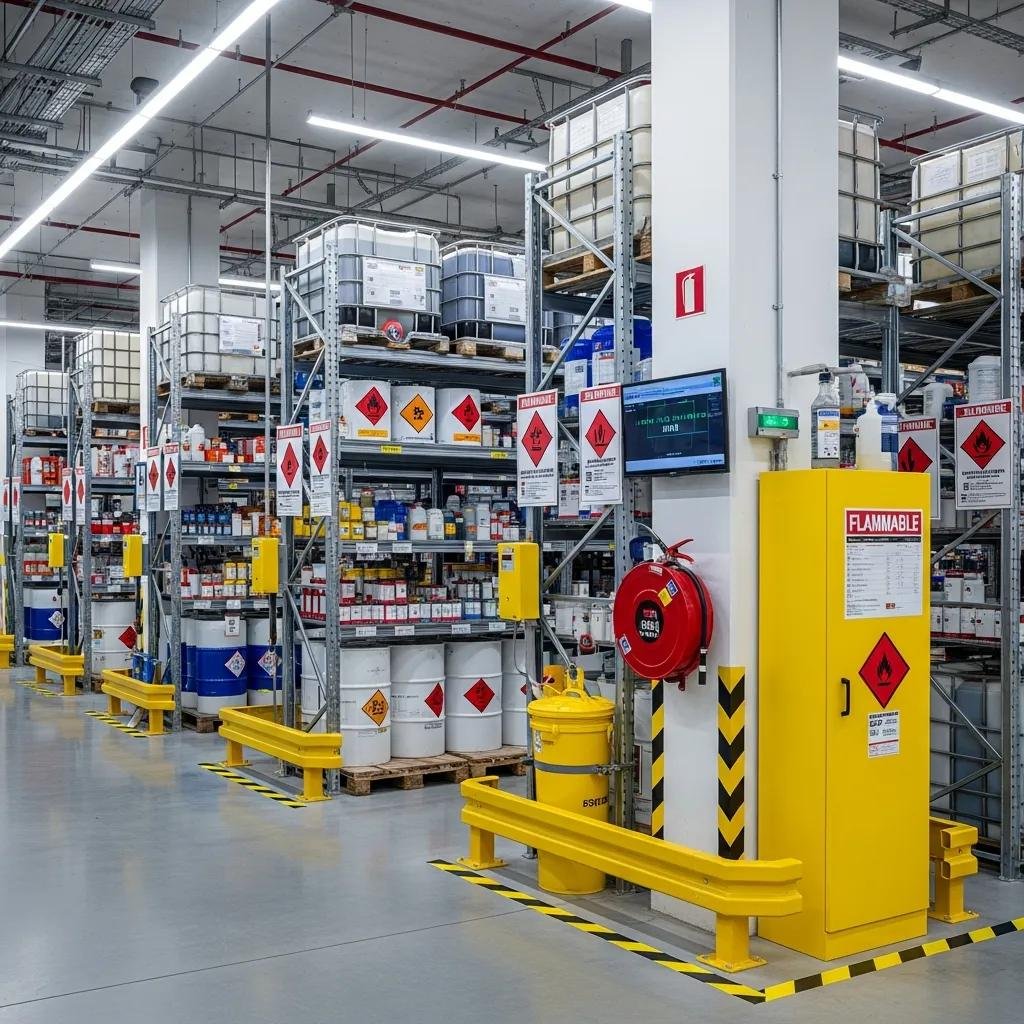
The Occupational Safety and Health Administration (OSHA) and the Environmental Protection Agency (EPA) set standards on labelling, Safety Data Sheets (SDS), and hazardous waste storage. The EPA also requires containment to prevent leaks and spills. Following these standards is essential for compliance.
How do NFPA fire safety codes apply to hazardous material storage?
The National Fire Protection Association (NFPA) codes define fire-prevention measures including aisle spacing, storage heights, and fire suppression systems. Meeting NFPA requirements reduces fire risk and protects staff and assets.
How can warehouse design optimize hazardous materials storage safety?
Good warehouse design reduces risk and helps ensure compliance. Proper layout and engineered systems support safer storage and easier emergency response.

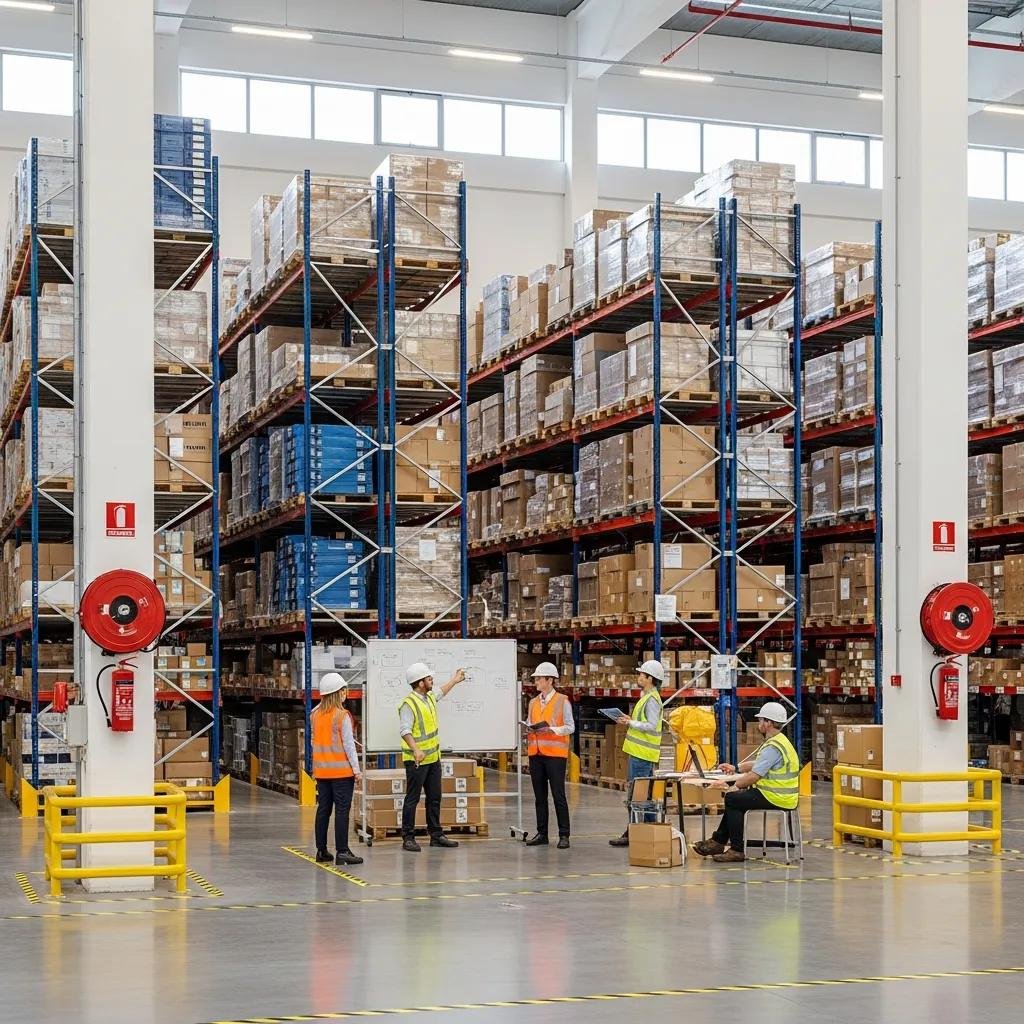
Key design features include clear aisle spacing, proper ventilation, and fire protection systems. These reduce hazards and improve compliance.
Designing Safe Hazardous Materials Warehouses
The safe design of a hazardous chemical warehouse is required. Hazard and regulation assessments inform hazardous-area classification and safety design requirements.
Design a safe hazardous materials warehouse, 2014
Quantum Warehouse Solutions provides services focused on hazmat storage compliance and safety, helping ensure facilities meet applicable regulations.
What are the best practices for risk management and emergency procedures in hazmat warehouses?
Risk-management practices reduce incidents and improve emergency response readiness.
Warehouse Safety & Hazardous Materials Risk Assessment
Approaches to control warehouse risks protect environment, equipment, and workers when handling hazardous materials.
M. Andrejić, 2023
How to develop effective spill response and fire prevention plans?
Effective plans include documentation, fire prevention measures, and regular employee training.
- Detailed Documentation: Maintain records of hazardous materials, quantities, and locations.
- Fire Safety Measures: Inspect fire suppression systems and train employees regularly.
- Emergency Response Training: Prepare staff for spills, leaks, and fire incidents.
How do compliance audits and consulting services improve hazardous materials storage?
Audits and consulting identify gaps, reduce liability, and improve safety systems.
What does a hazardous materials compliance audit include?
- Documentation Review: SDS, labeling, and storage records.
- Operations Review: Handling procedures and workflows.
- Facility Inspection: Identify hazards and compliance issues.
Conclusion
Following hazardous materials storage regulations, optimizing warehouse design, and applying strong risk-management practices protects workers and reduces legal exposure. Expert consulting can further strengthen compliance and safety performance.