Table of Contents
ToggleUsed Pallet Racking in Texas: Understanding Compliance Risks and Safety Standards
Used pallet racking keeps Texas warehouses efficient but can introduce compliance risks. Understanding applicable safety standards, regular inspections, and clear maintenance practices helps managers reduce accidents and legal exposure.
What Are the Key Texas Warehouse Safety Regulations for Used Pallet Racking?
Texas enforces rules for pallet racking to protect workers and maintain system integrity. These legal requirements are central to safe operations.
Which permits are required for pallet racking installation in Texas?
Permits vary by local jurisdiction but commonly include structural, electrical, and fire-safety approvals.
- Building Permit : Necessary for structural modifications.
- Electrical Permit : Required when electrical components are installed.
- Fire Safety Permit : Confirms compliance with fire-safety rules.
Confirm required permits with local authorities before installation.
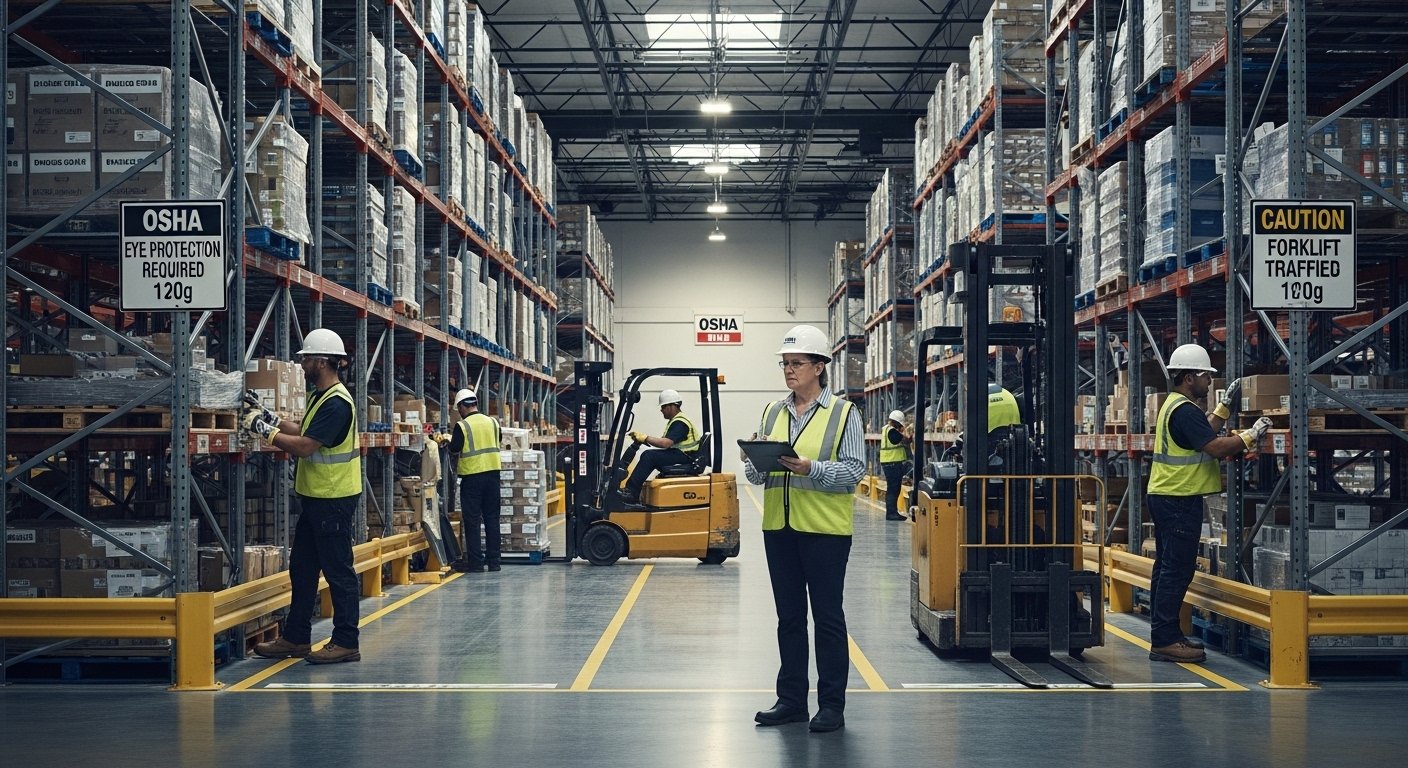
How do recent OSHA updates affect Texas warehouse compliance?
Recent OSHA updates refine inspection frequency, fire-safety guidance, and audit expectations for warehouses.
- Increased Inspection Frequency : More frequent inspections are recommended for racking systems.
- Updated Fire Safety Standards : New guidance strengthens fire-safety measures.
- Regular Audits : Routine audits are emphasized to verify compliance.
Monitor regulatory updates and adjust schedules and procedures as needed.
Embedding compliance into daily operations — not just keeping paperwork — improves workplace safety.
OSHA Compliance & Warehouse Safety: Beyond Paperwork
The paper argues that citing OSHA rules and showing compliance paperwork rarely make day-to-day operations safer. Sustained safety requires converting policy into practice and embedding compliance into everyday workflows.
From Policy to Practice: Why Citing Regulations Won’t Keep Your Warehouse Safe, 2025
How to Conduct a Warehouse Racking Inspection Checklist for Used Pallet Racks?
Regular inspections of used pallet racks spot hazards and verify compliance; use a concise checklist to keep inspections consistent and efficient.
Enforcement frequently targets areas where forklifts and racking interact, so focus inspections on those zones.
Cal/OSHA Enforcement & Racking Safety in Warehouses
The study reviews Cal/OSHA citations and notes that inspections frequently focus on interactions between forklifts and racking or pallets. Cal/OSHA’s High Hazard unit concentrates enforcement on these risks.
Worker injuries in Southern California’s warehousing industry: how to better protect workers in this burgeoning industry?, 2021
What are the common damage types to assess during inspections?
Inspectors should check for damage that affects safety and load capacity.
- Structural Damage : Look for bent or broken beams that compromise integrity.
- Corrosion : Check for rust, especially where moisture collects.
- Load Placard Issues : Ensure placards are visible and show correct weight limits.
Addressing these issues promptly helps prevent failures and keep systems compliant.
How often should inspections be performed to meet Texas compliance?
Inspect according to facility use and risk profile.
- Monthly : High-traffic operations.
- Quarterly : Moderate-use warehouses.
- Annually : Low-traffic facilities.
Consistent inspections reduce accident risk and regulatory exposure.
What Are the Compliance Risks Associated with Used Pallet Racking in Texas?
Used pallet racking can create risks when damage, unauthorized modification, or mislabeling goes unchecked. Early detection and clear procedures reduce exposure.
Following OSHA and local standards—training operators and enforcing load procedures—helps prevent accidents across your facility.
OSHA Standards for Warehouse & Storage Safety
Guidance stresses training, evaluation and certification of forklift operators and following safe procedures for handling and stacking loads to prevent accidents and meet OSHA standards.
Warehousing & storage safety, 2010
For businesses aiming to optimise operations, Quantum Warehouse Solutions offers services to help ensure warehouses are efficient and meet safety standards.
How does structural damage impact warehouse safety and load capacity?
Structural damage reduces load capacity and raises the risk of collapse or product loss; prompt repair preserves capacity and lowers liability.
- Risk of Collapse : Damaged racks can fail under load.
- Reduced Load Capacity : Structural issues lower safe load limits.
- Increased Liability : Non-compliance can lead to legal and financial penalties.
Regular maintenance and timely repairs lower these risks.
What are the consequences of non-compliance with Texas safety standards?
Non-compliance can carry significant business impacts.
- Fines and Penalties : Regulators may impose substantial fines.
- Operational Shutdowns : Serious breaches can force temporary or extended closures.
- Insurance Complications : Coverage may be limited or denied after violations.
Understanding these consequences highlights why adherence to safety rules matters.
To keep operations safe and efficient, consider partnering with a reliable provider versed in Texas warehouse regulations.
What Are the Best Practices for Maintenance and Repair of Used Pallet Racking?
Use clear maintenance practices to preserve safety and compliance for used racking systems.
How to implement effective repair strategies to mitigate compliance risks?
Effective repair strategies include:
- Regular Inspections : Identify and fix issues promptly.
- Professional Assessments : Use qualified technicians for repairs and evaluations.
- Documentation : Record inspections and repairs to demonstrate compliance.
These measures preserve racking integrity and reduce compliance risk.
For comprehensive warehouse solutions , working with a specialist helps ensure operations meet regulatory requirements.
When is recertification or used pallet rack certification necessary?
Recertification is needed after major repairs, significant modifications, or as part of periodic reviews to confirm safety.
- After Significant Modifications : Recertify altered systems.
- Following Major Repairs : Verify safety after substantial repairs.
- Periodic Reviews : Regular recertification every few years is recommended.
Keeping certification current supports safe warehouse operations.
Frequently Asked Questions
What are the benefits of using used pallet racking systems?
Used racking can reduce costs, support sustainability, and provide faster availability than new systems.
How can warehouse operators ensure employee safety around pallet racking?
Combine practical training, clear load limits, visible signage, and routine inspections to keep staff safe.
What should be included in a pallet racking maintenance plan?
A plan should schedule inspections, document findings, track repairs and recertifications, and assign responsibilities.
How can technology assist in managing pallet racking compliance?
Use inspection software, RFID/barcode tracking, and compliance reminders to record issues and manage actions.
What are the signs that a pallet racking system needs to be replaced?
Replace racks when structural damage, heavy corrosion, frequent repairs, or performance shortfalls make them unsafe or impractical.
Are there specific training requirements for employees working with pallet racking?
Yes. Train staff on operating procedures, load handling, inspection duties, and emergency response, and maintain certifications per OSHA guidance.
Conclusion
Managing compliance risks for used pallet racking in Texas requires following regulations, running routine inspections, keeping records, and repairing or recertifying systems when needed. Partnering with experienced specialists can simplify compliance and improve safety.